
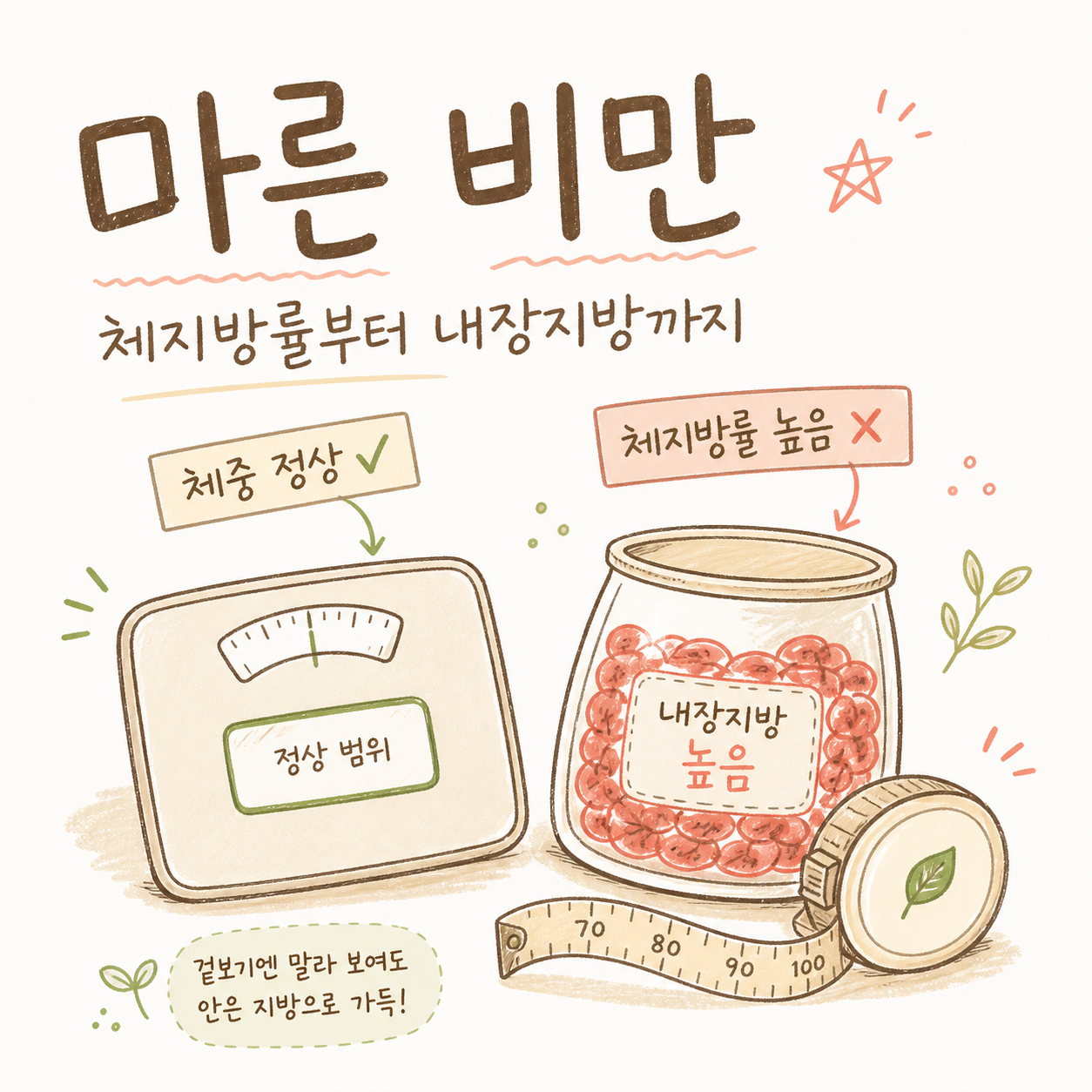
Skinny Fat: Body Fat to Waist Size

Table of Contents
Many patients come to my clinic looking slim in the mirror but with a belly that folds when they sit. When they ask, 'Doctor, I'm not overweight, so why do I have a protruding belly?' I find myself nodding in understanding. The scale doesn't lie, but there's one thing it can't see. Today, let's talk about skinny fat - the hidden health risk.

What is Skinny Fat?
Skinny fat refers to a condition where weight and BMI are normal, but body fat percentage and visceral fat are high. While appearing thin with a normal BMI (typically 18.5-22.9 kg/m²), the body's fat ratio actually reaches obesity levels. This body type, often called ET or TOFI, features slim limbs with a protruding belly and waist.
The problem extends beyond just unsightly belly fat. It's classified as a challenging condition with metabolic disease risks (like diabetes and hypertension) comparable to general obesity.
Why 'Skinny' Fat?
The term seems contradictory - skinny yet fat. However, the definition of 'obesity' has two aspects: BMI calculated from weight and height, and the actual ratio of body fat. While we typically use the former when saying 'I haven't gained weight,' the latter often determines true health.
A body with low muscle and high fat is internally obese even at a light weight. InBody tests clearly show this pattern: low muscle mass with high body fat percentage. Many people rely solely on weight and discover this condition too late.
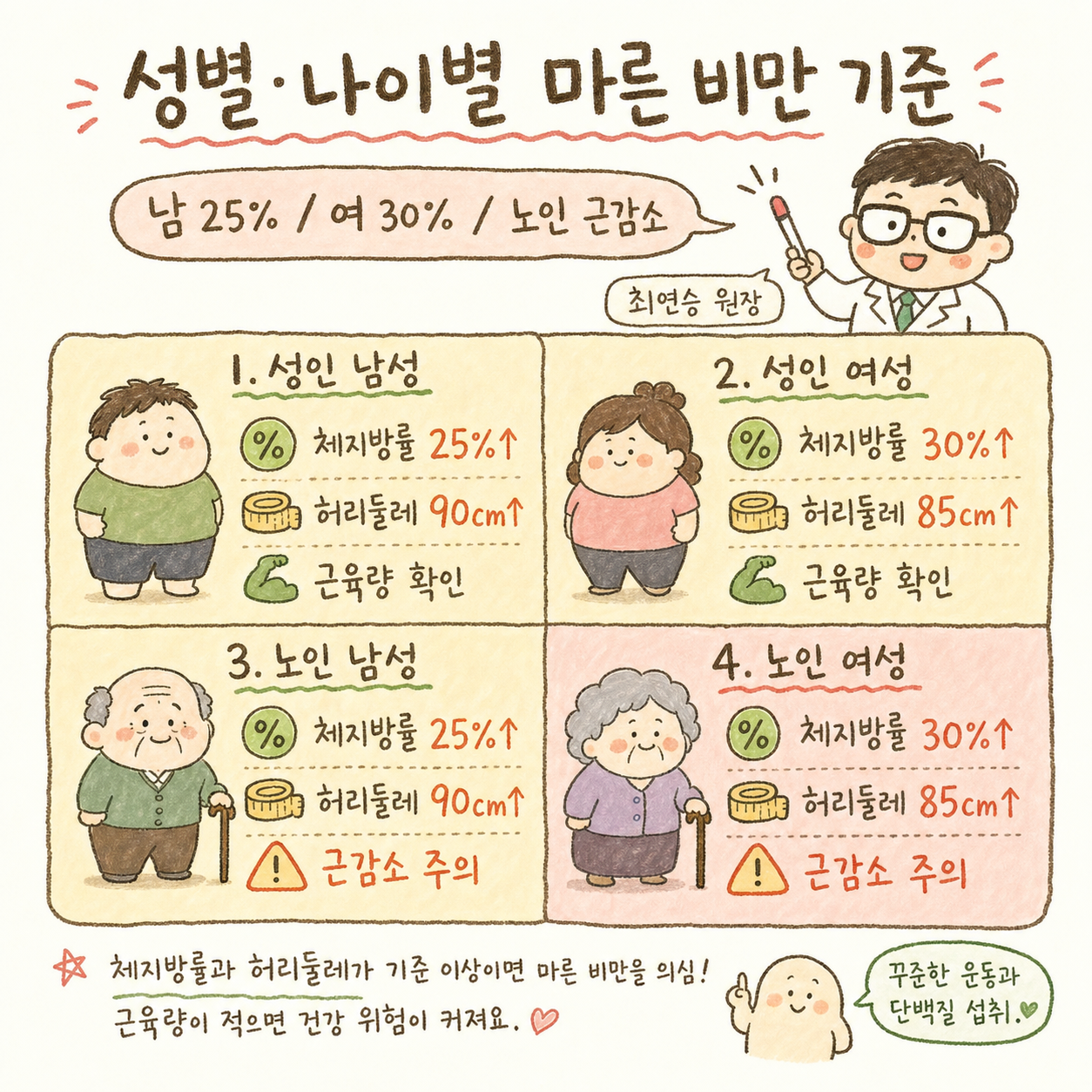
Are You Skinny Fat? — Checkpoints
Since it's hard to tell just by looking in the mirror, here are key indicators:
- Normal weight and BMI but high body fat percentage on InBody
- Slim, soft limbs but protruding belly and waist
- Men: Body fat ≥25% with waist circumference ≥90cm indicates risk
- Women: Body fat ≥30% with waist circumference ≥85cm indicates risk
- InBody shows decreasing muscle mass and increasing visceral fat
Standards change with age. For elderly with sarcopenic obesity, risk levels are:
- Elderly women: Body fat ≥38% with muscle mass ≤5.45 kg/m²
- Elderly men: Body fat ≥27% with muscle mass ≤7.26 kg/m²
The key isn't weight but the fat-to-muscle ratio.
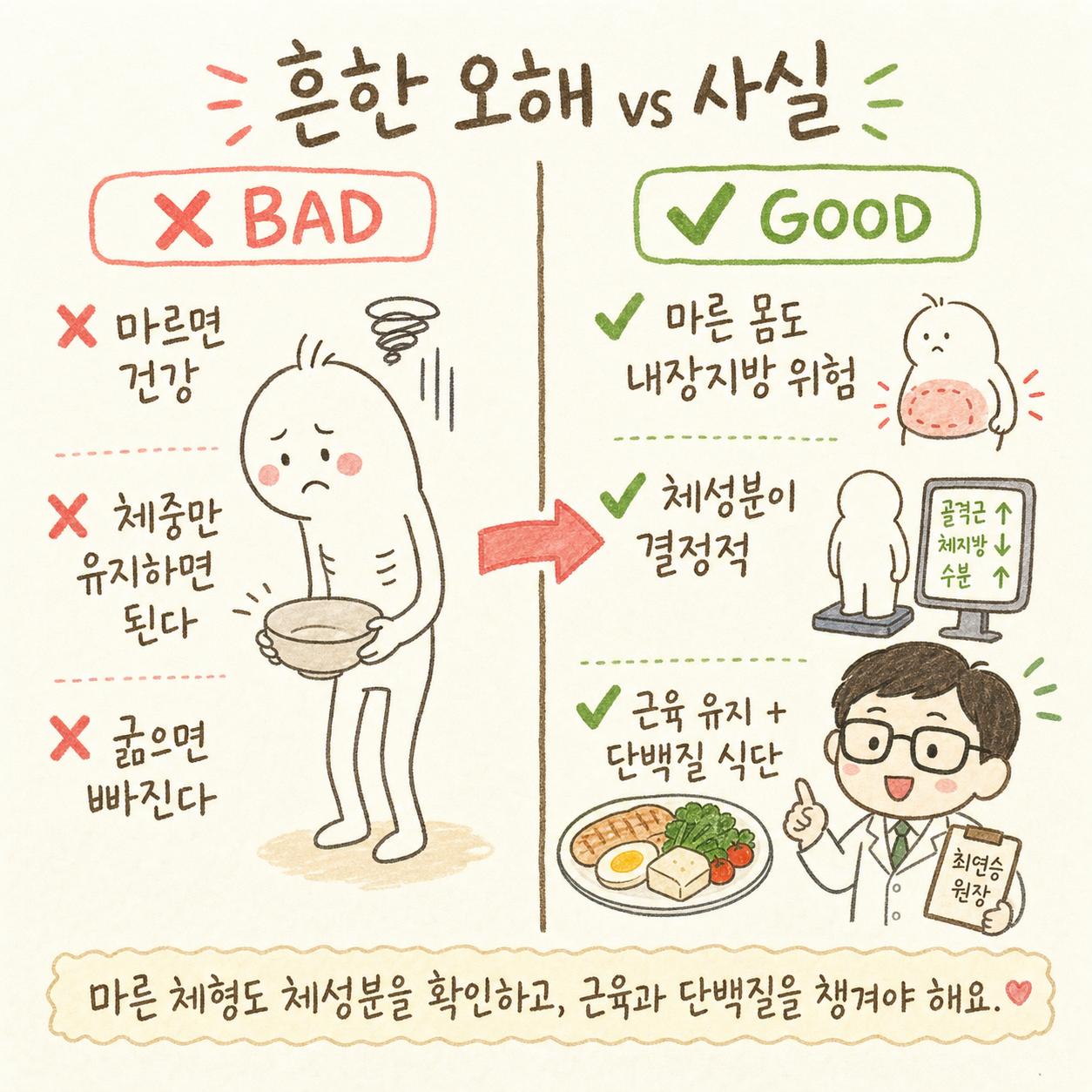
Common Misconceptions
Let's address the biggest misconception first: 'Thin equals healthy.' Unfortunately, a thin body doesn't guarantee health. Even with a slim appearance, accumulated visceral fat brings metabolic disease risks similar to obesity.
Second is the belief that 'maintaining weight is enough.' However, if you maintain weight while losing muscle and gaining fat, you're moving toward skinny fat despite stable scale numbers.
Third, the myth that 'starving leads to weight loss.' Starvation primarily reduces muscle and water weight. The muscle you want to keep disappears first while fat remains, creating a paradox where starving actually promotes skinny fat. I emphasize this because I once believed it too.
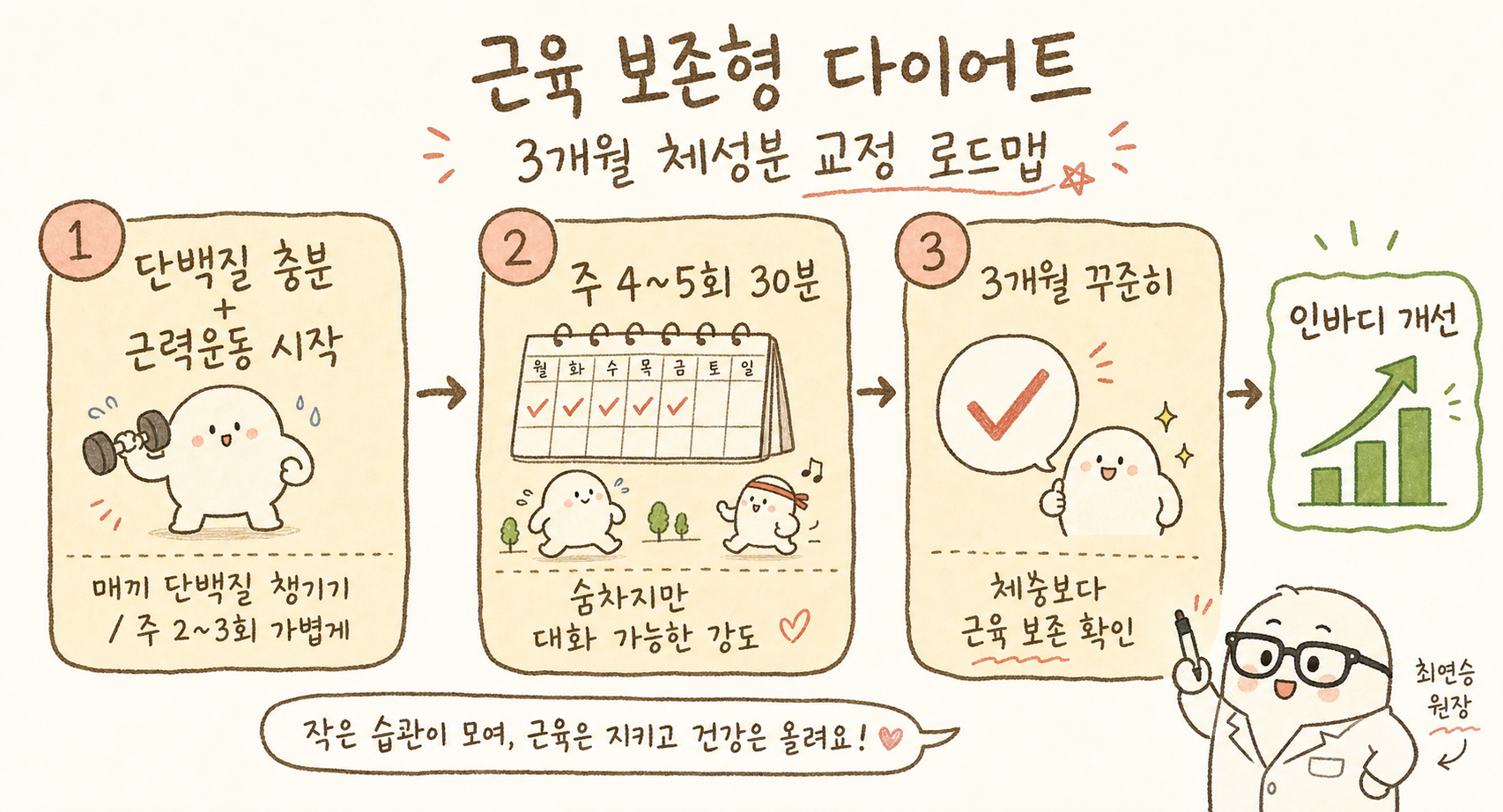

From a Weight Management Perspective: Does This Really Work?
Weight management for skinny fat differs from typical approaches. The goal isn't 'weight loss' but 'body composition correction' - building lost muscle while reducing excess fat.
Simply eating less doesn't work. Focus first on adequate protein intake to preserve muscle. For exercise, combine strength training with cardio rather than just long cardio sessions. Start with manageable 30-minute sessions 4-5 times weekly, gradually increasing to 40-60 minutes as you build endurance. Track progress through InBody measurements and waist circumference rather than just weight.
Be patient. While muscle loss happens quickly, building it takes time. Meaningful InBody changes typically require about three months of consistency. Expecting dramatic results in one week leads to burnout - taking the long view is actually the fastest path.
You might never notice skinny fat by watching the scale alone. Remember: composition matters more than weight, and preserving muscle is more important than starving. Keeping these two points in mind means you're already halfway there. If you're unsure where to start, Baekrok Gambi-jung can help you begin with a thorough body composition analysis. As someone who's faced similar challenges, I encourage you to take that first step with confidence.