
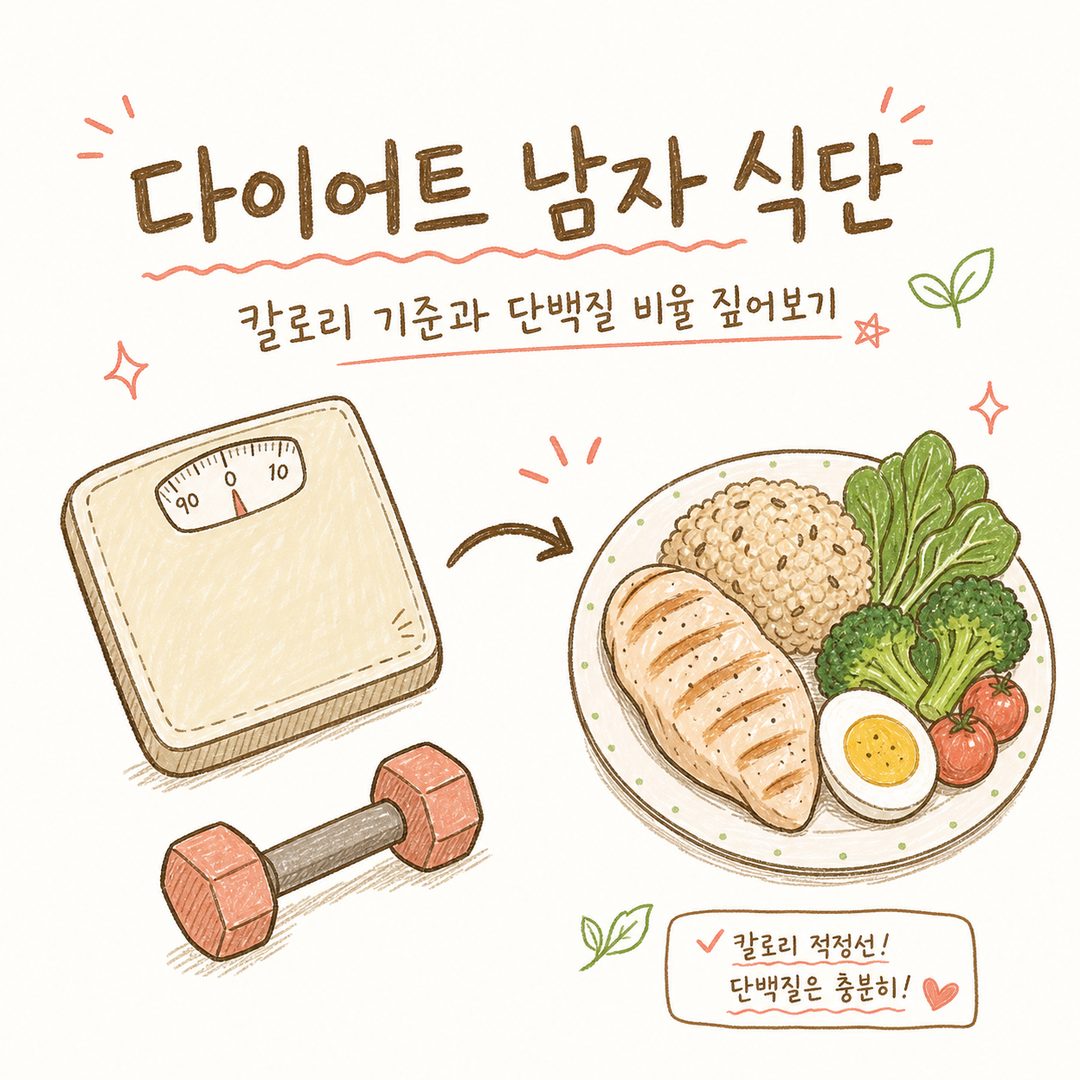
Men's Diet Plan: Calorie & Protein Guide

Table of Contents
Ever caught yourself grabbing your love handles in the mirror and sighing? Many patients in my clinic exercise regularly but feel lost when it comes to diet planning.

Why Men Need a Different Diet Approach
Men typically have more muscle mass and different hormonal profiles, leading to a pattern of "losing weight quickly but rebounding severely." Health guidelines often emphasize that men's weight management relies on three pillars: diet (70-80%), strength + cardio exercise, and managing sleep, stress, and alcohol. I always stress in my clinic that diet accounts for 70-80% of results. Relying solely on intense exercise for quick weight loss often leads to side effects like muscle loss, fatigue, hair loss, and gallstones.
I particularly advise against extreme weight loss of 10kg in 2-3 weeks. The medically recommended healthy weight loss rate is 0.5-1kg per week. To achieve this, you need a daily caloric deficit of 500-1000kcal (intake < expenditure).
Setting Your Daily Calorie Target
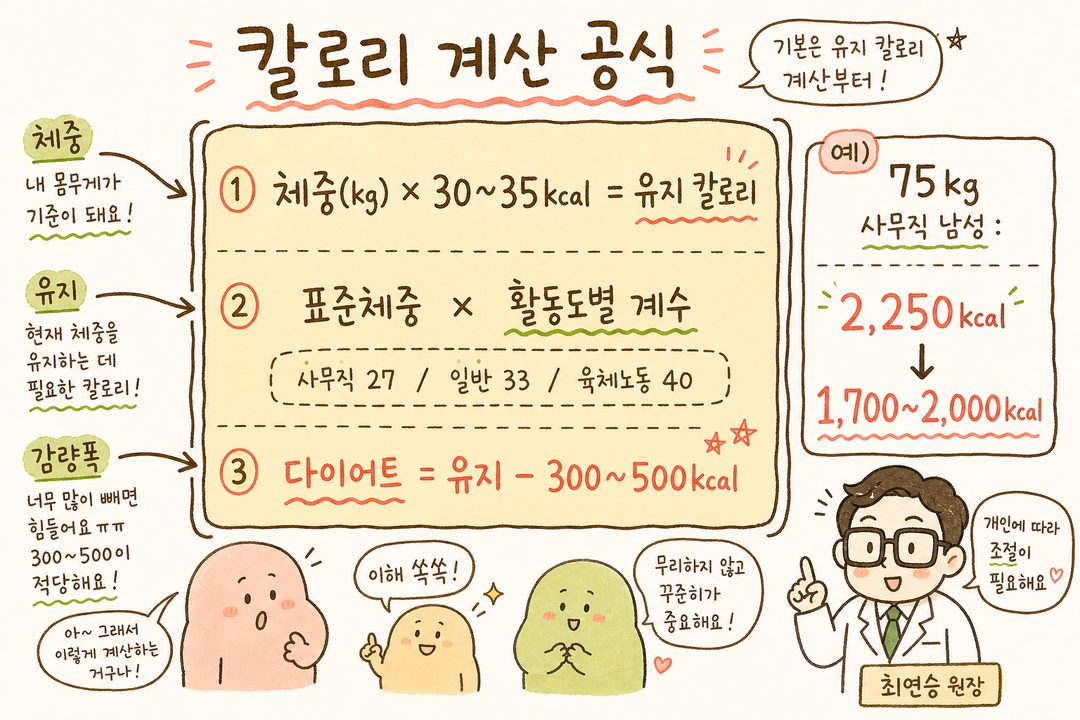
Arbitrarily cutting calories often leads to binge eating within days. A safe starting point is 400-600kcal below your maintenance calories.
For men at a healthy weight, maintenance calories are typically 30-35kcal per kg of body weight. For example, a 75kg office worker in his 30s would maintain at 2,250-2,600kcal, with a weight management target of 1,700-2,000kcal daily.
Here's another method: Calculate standard weight as height(m)² × 22. For sedentary office workers, multiply standard weight by 27kcal; for moderate activity, ×33kcal; for physical labor, ×40kcal. For example, a 175cm office worker would have a standard weight of about 67kg, maintenance around 1,800kcal, and could start with 1,300-1,500kcal by reducing 300-500kcal.
Protein, Carbs, and Fat Ratios
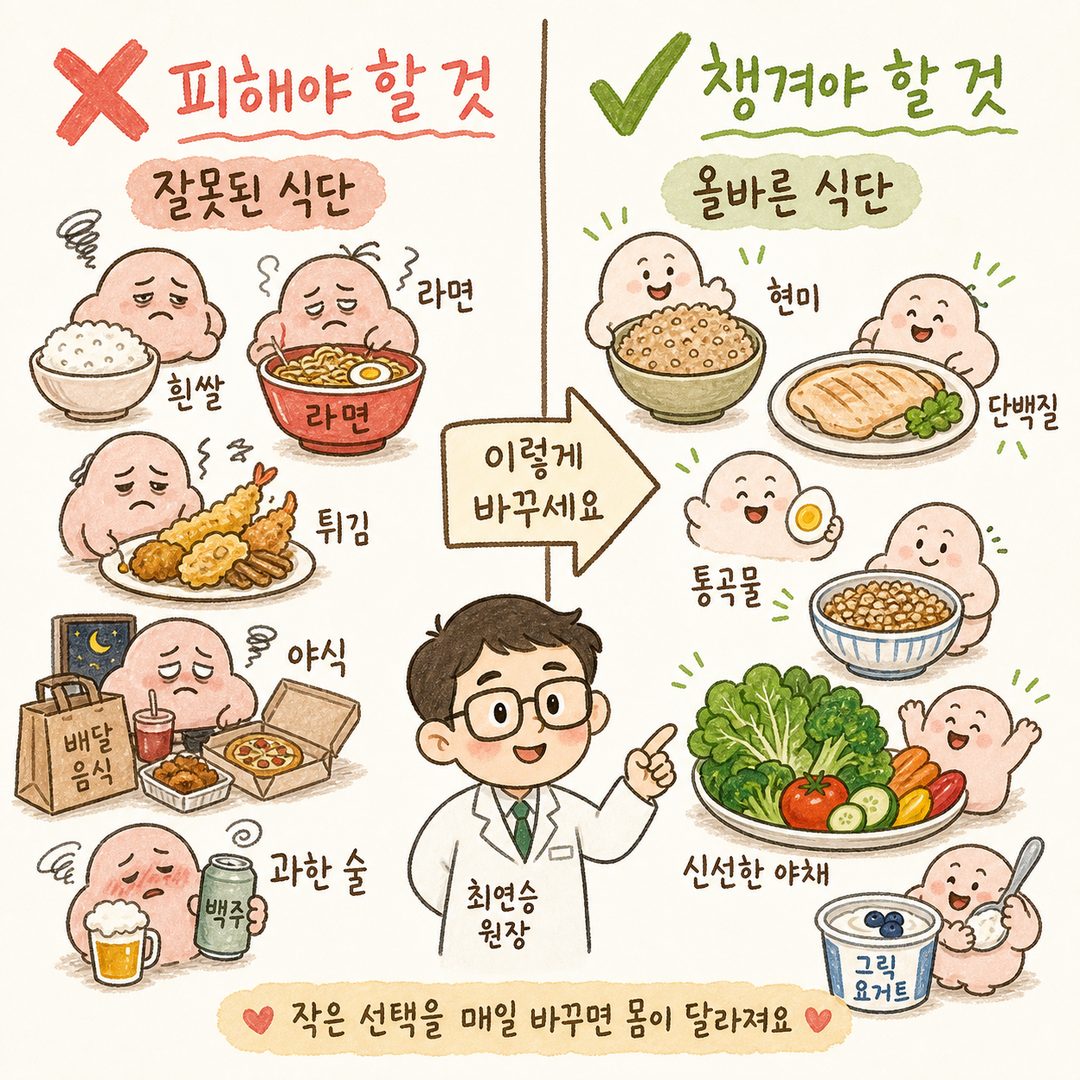
Let's simplify: "Prioritize protein, switch to whole grains for carbs, choose unsaturated fats."
- Protein: Generally recommended at 1.6-2.0g per kg of body weight. Some guides suggest 1.2-1.5g during weight management/exercise. For a 75kg person, that's 120-150g (480-600kcal).
- Fat: 20-30% of total calories, typically 50-60g daily.
- Carbs: Fill the remaining calories with whole grains, sweet potatoes, brown rice, and fruits.
Another recommendation for middle-aged men suggests 40% carbs, 30% protein, 30% fat, totaling 1,500-1,700kcal daily. Adjust based on your body type and activity level.
A Day in the Life: Office Worker's Meal Plan
Here's a typical 1,800kcal plan I often recommend in clinic for office workers who exercise 2-3 times weekly:
- Breakfast: 100g brown rice (half bowl,
150kcal) with two boiled eggs and vegetables (400kcal total) - Lunch: Korean meal with multigrain rice instead of white rice, plus a portion of fish or chicken breast
- Dinner: Light meal focusing on tofu, vegetables, and whole grains
- Snacks: A handful of nuts or Greek yogurt if needed
Remember: Don't eliminate carbs—replace refined carbs (white rice, white bread, sugar, snacks, ramen) with complex carbs (brown rice, whole grains, sweet potatoes, oats). Also manage alcohol frequency and quantity, as the real issue isn't the drink itself but the accompanying snacks and late-night eating.
Baekrokdam's Perspective on Men's Weight Management
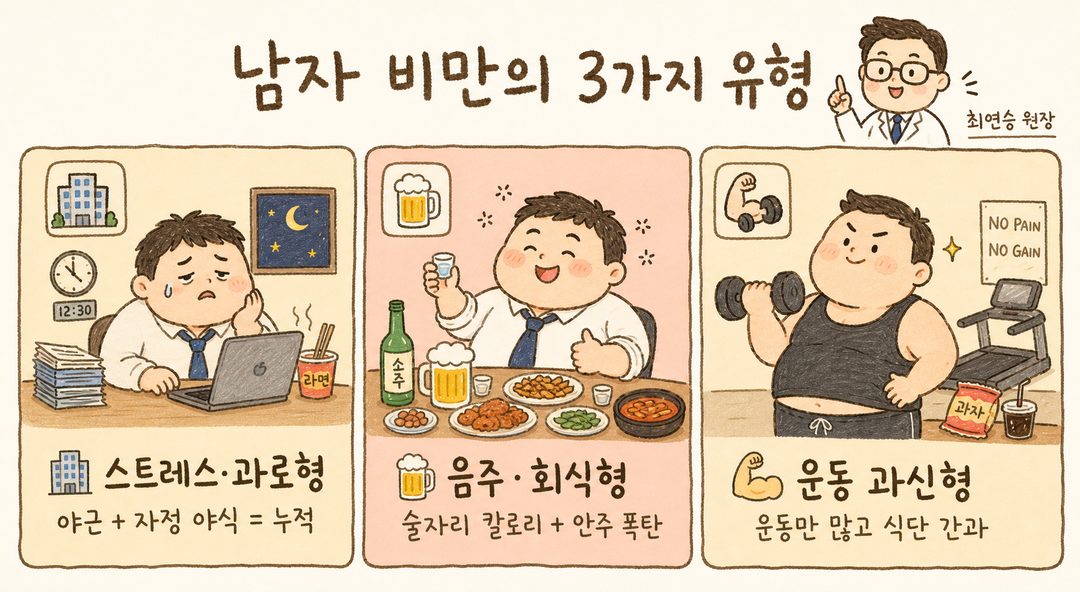
In Korean medicine, we recognize that weight gain has different root causes for different people. In my practice, I typically see three patterns among men in their 30s-50s:
Stress/Overwork Type: Those who work late and eat near midnight. For them, calorie counting alone isn't enough—we need to address sleep patterns and late-night eating triggers first.
Drinking/Business Dinner Type: Those who think they don't eat much but accumulate calories through frequent drinking occasions. We start by examining weekly social dining frequency.
Overconfident Exerciser Type: Those who believe gym sessions alone will solve everything. I emphasize that diet accounts for 70-80% of results.
Herbal prescriptions vary based on these patterns. We don't prescribe the same formula for someone with poor appetite control, water retention, or weak digestion. The focus remains on diet, exercise, and lifestyle modification, with herbal medicine playing a supporting role.
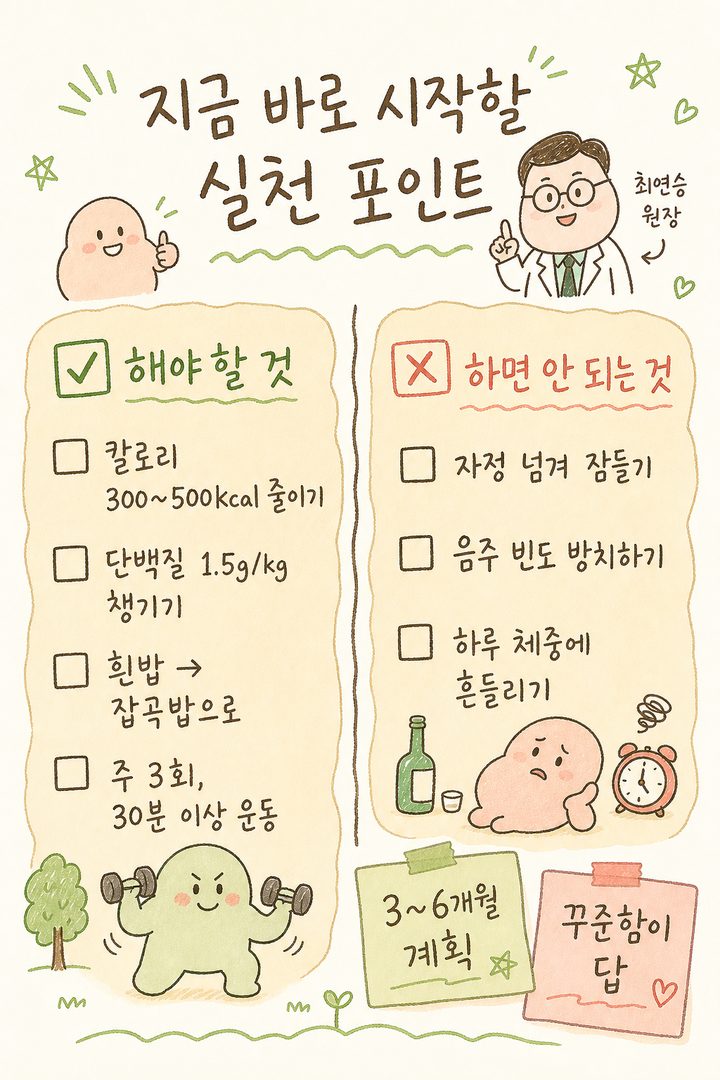

Action Points to Start Today
Here are some immediate changes you can make:
- Reduce daily calories by 300-500kcal from your current intake. Cutting 1,000kcal from the start is unsustainable.
- Include a palm-sized portion of protein with each meal. Aim for 1.5g per kg of body weight.
- Switch white rice to multigrain, white bread to whole grain. It's about substitution, not elimination.
- Exercise 3 times weekly, 30+ minutes per session, combining strength and cardio. This is sustainable long-term.
- Sleep before midnight and monitor alcohol frequency. Poor sleep disrupts diet consistency.
- Track weight weekly averages, not daily fluctuations.
A realistic approach involves creating sustainable habits over 3-6 months. Extreme weight loss of 10kg in 2-3 weeks almost always leads to rebound weight gain.
For those struggling with fluctuating appetite, water retention, or fatigue despite dietary efforts, Baekrokdam Korean Medicine Clinic offers personalized consultations considering male body types, lifestyles, and constitutions. We combine dietary guidance with herbal prescriptions like Baekrok Gambi-jung. If you're feeling stuck, consider visiting us to create a sustainable plan together.