

How to Lose Alcohol Belly: Drinking, Snacks & Visceral Fat

Table of Contents
We've all sighed while grabbing our love handles after a night out. As a doctor, I often hear 'I exercise but can't lose my belly.' There's a reason why drinkers struggle with belly fat. Let me explain.
What Is an Alcohol Belly?
The term alcohol belly refers to increased visceral fat in the abdomen due to frequent drinking and snacking. It's characterized by a protruding belly while limbs remain relatively unchanged. While not a medical term, it accurately describes the pattern of fat accumulation in the abdominal area.
Why Does Fat Accumulate in the Belly?
Alcohol contains about 7 kcal per gram, nearly as much as fat (9 kcal). A bottle of soju (360 mL, 20%) contains approximately 400-500 kcal, while 500 mL of beer contains about 200-250 kcal. These numbers add up quickly.
The issue isn't just calories. When alcohol enters the body, the liver prioritizes detoxification, inhibiting fat burning during this process. Unused energy gets stored as visceral fat. Add high-calorie snacks like fried foods or late-night meals, and you can easily consume 1000-2000 kcal in one sitting. This is why exercise alone often fails - it's like trying to empty a bathtub without turning off the tap.
Core Rules - Follow These Four Together
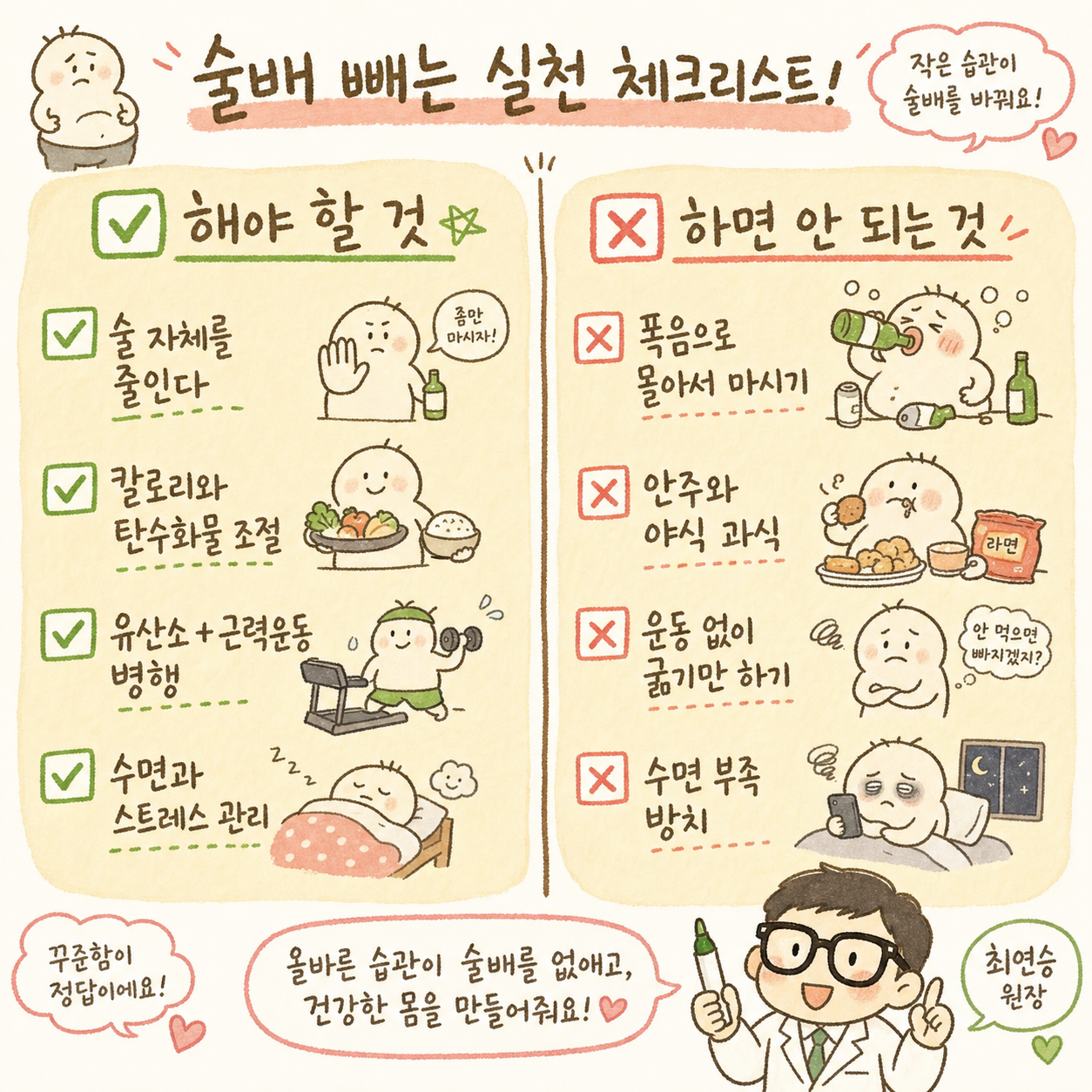
Addressing alcohol belly requires a multi-faceted approach. Government guidelines and experts emphasize these four key strategies:
- Reduce alcohol consumption - This is the top priority. Start by assessing and gradually decreasing your intake.
- Control total calorie and carbohydrate intake (especially from snacks) - Snacks often contribute more calories than the alcohol itself.
- Combine cardio and strength training - Aim for 150-300 minutes of cardio plus 2-3 strength training sessions weekly.
- Manage sleep and stress - Lack of sleep and high stress can disrupt appetite control.
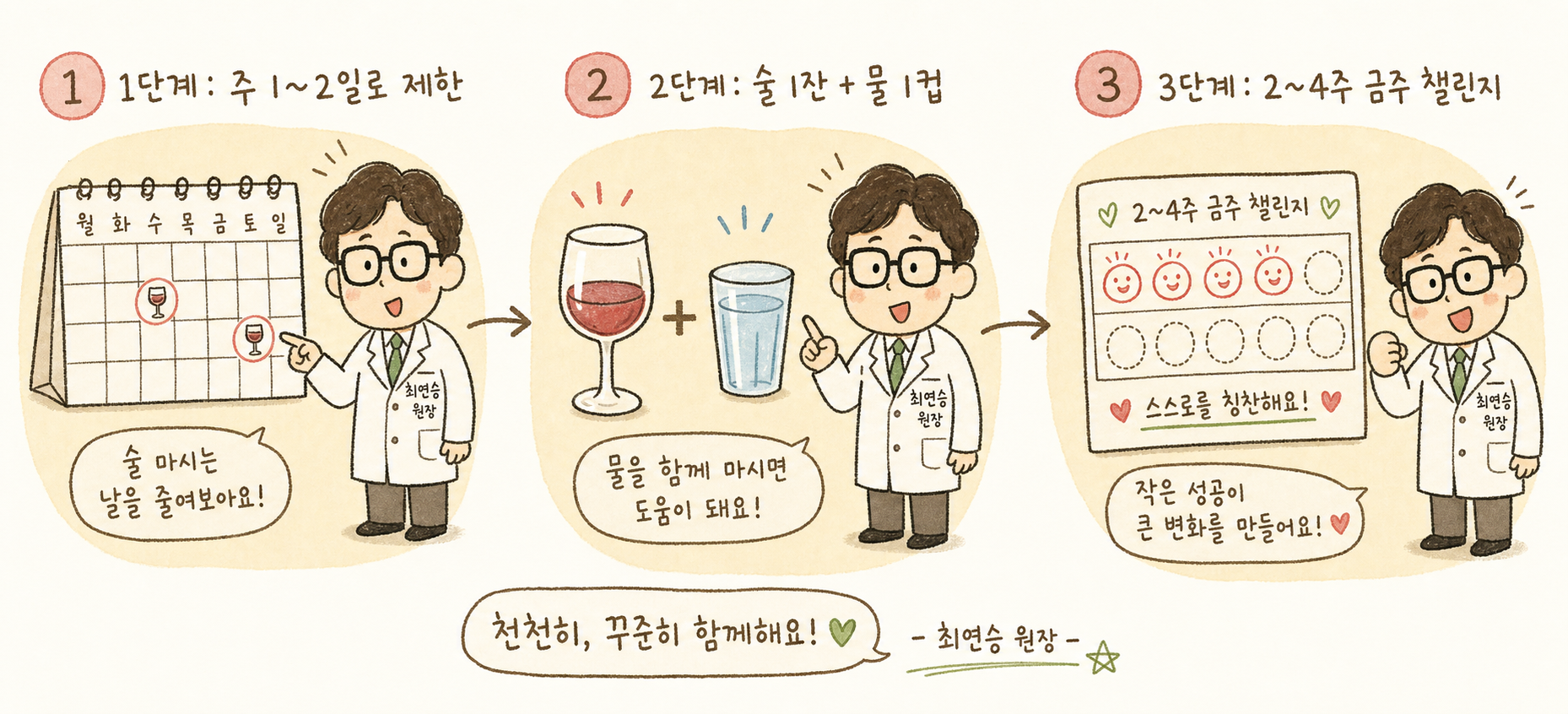
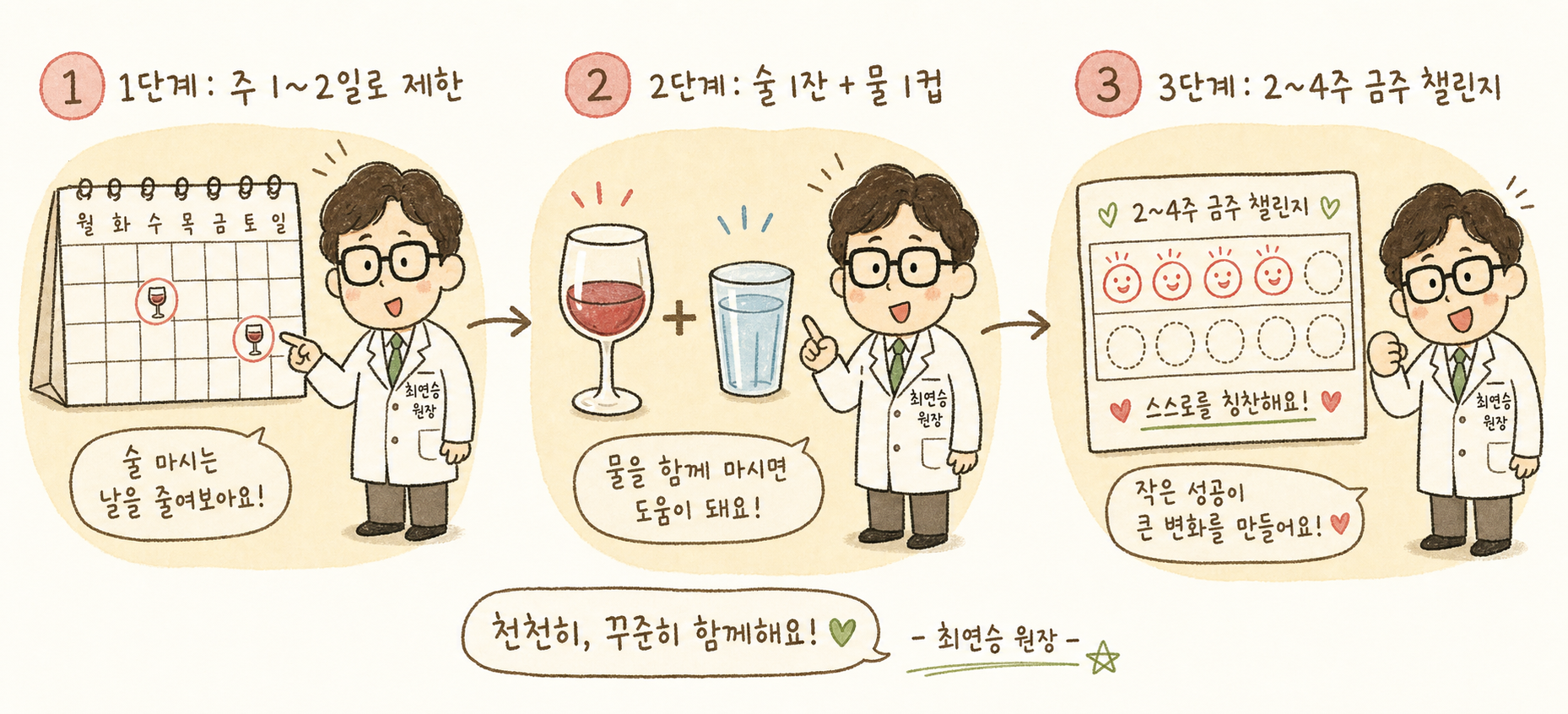
Here are some practical tips for reducing alcohol consumption: Limit drinking to 1-2 days per week, drink one glass of water for each alcoholic drink, and consider a 2-4 week alcohol-free challenge. Many people notice reduced waist circumference during this period. If complete abstinence feels overwhelming, simply setting limits on drinking days and quantities is a good start.
Common Misconceptions
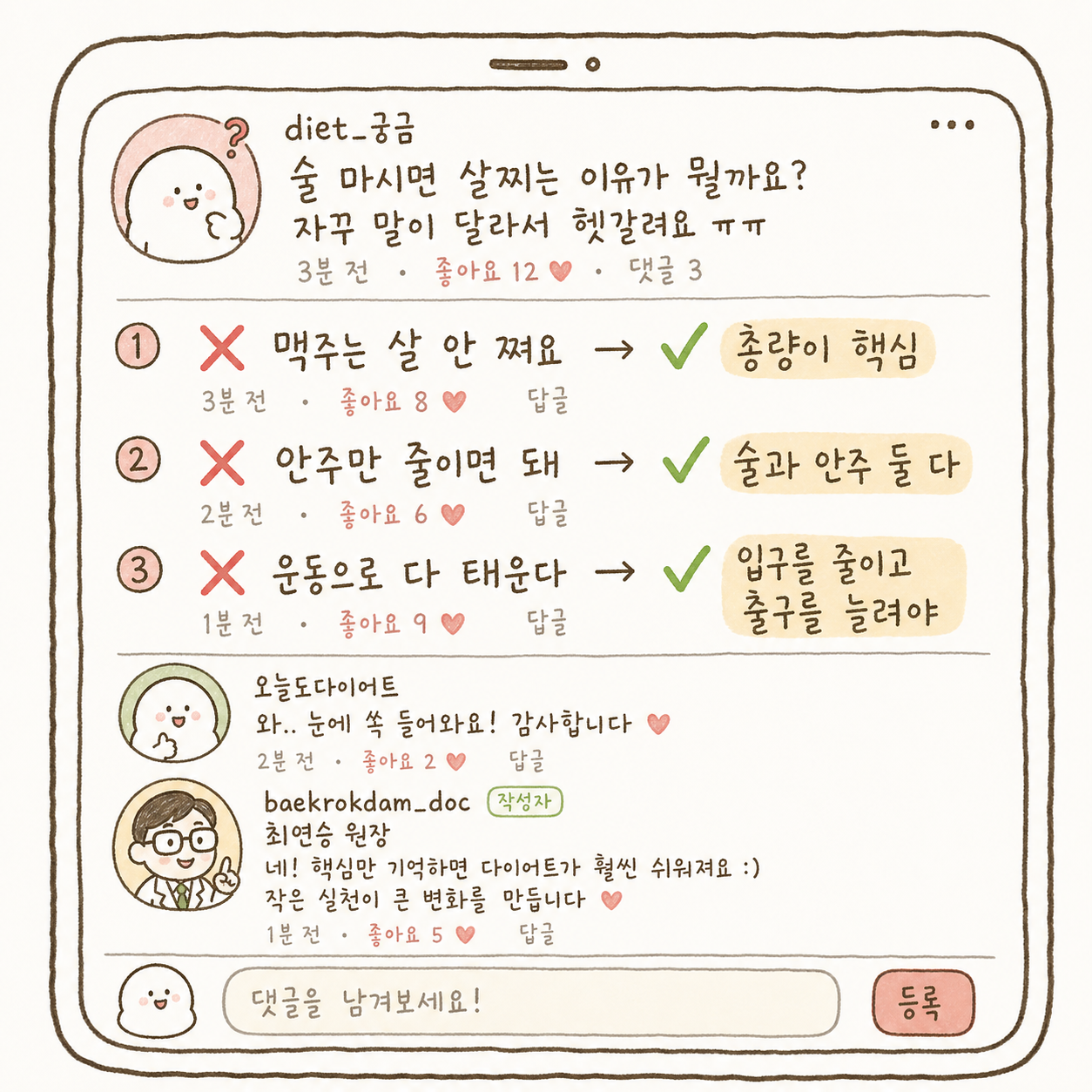
Let's address some frequent misunderstandings I encounter in practice:
"Beer doesn't make you fat" - I hear this often. But beer (500 mL) contains 200-250 kcal. The calories add up with each glass. Total quantity matters more than the type of alcohol.
"I don't eat many snacks, so I'm fine" - While reducing snacks helps, you still face alcohol's calories and fat-burning suppression. This is only solving half the problem.
"I'll just burn it off with exercise" - This is risky thinking. It's easy to consume over 1000 kcal in one drinking session, but burning that off takes considerable time. Without reducing intake, you'll always be playing catch-up.

From a Weight Management Perspective: Does This Really Work?
To be honest, reducing alcohol is a cost-effective weight management strategy. While I can't guarantee results, cutting back reduces calorie intake and allows fat burning to resume - the basic principle is sound.
However, quitting alcohol alone won't magically flatten your stomach. You need to implement all four strategies together to see changes in waist circumference. Patients who reduce alcohol while adjusting their diet and exercise routine for 2-4 weeks typically notice changes most quickly. Rather than expecting immediate results, think of it as gradually narrowing the entrance (calorie intake) while widening the exit (calorie expenditure).
Small habits matter: keeping a water glass next to your drink at social gatherings, marking drinking days on your calendar. These seemingly minor changes add up over a month. Since alcohol belly didn't appear overnight, give it time to disappear. If you're struggling alone or want to adjust your eating habits too, considering Baekrok Gambi-jung while reviewing your lifestyle could help. As always in my practice, we'll find a sustainable approach together.