
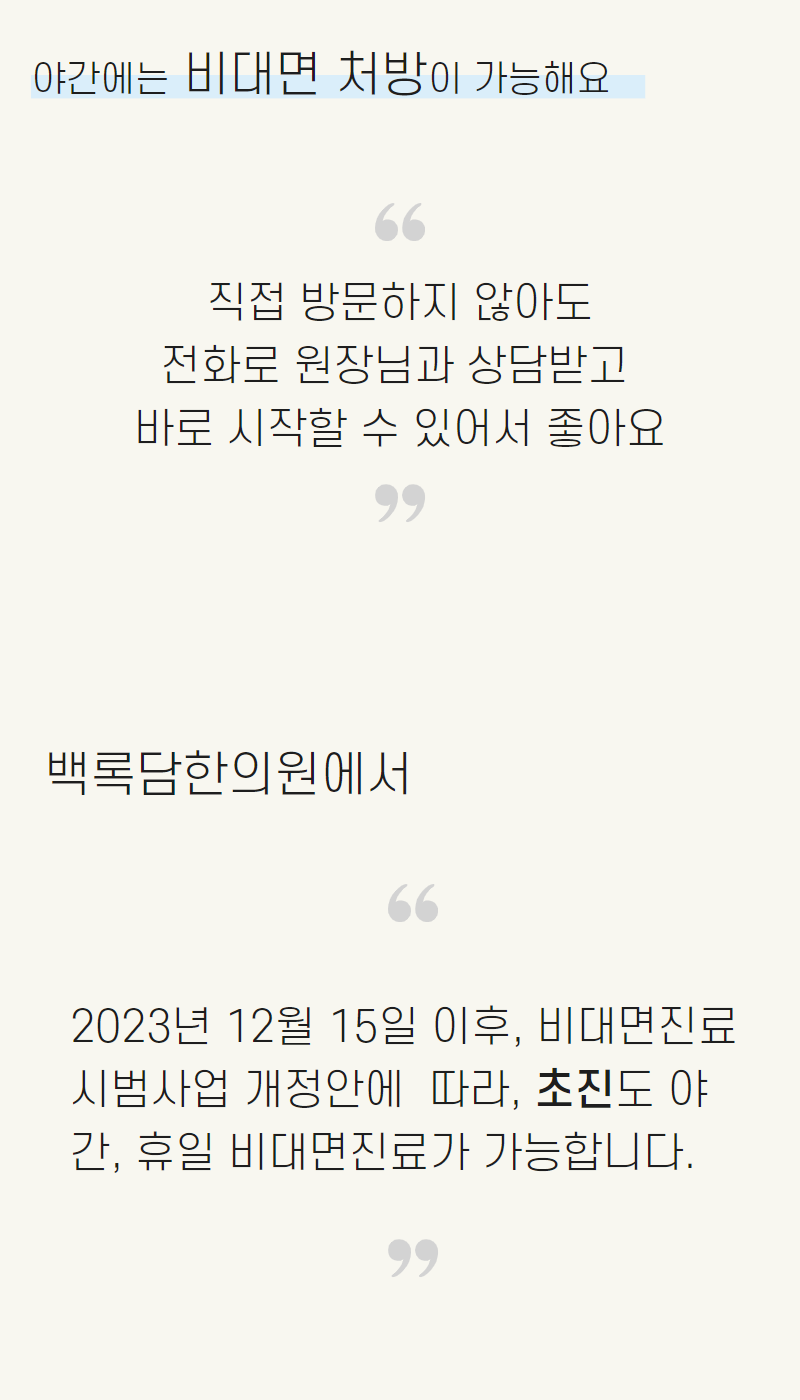
비대면 vs 대면
Q. I've seen a lot of non-face-to-face prescriptions for diet herbal medicine lately. Is there a difference between that and visiting a clinic in person?
A.
Non-face-to-face consultations offer great convenience and save time for busy professionals. However, the core of Traditional Korean Medicine (TKM) lies in 'physical examination' to assess your current state. To provide a more precise, personalized prescription, a practitioner needs to directly check your edema, complexion, and pulse rather than focusing solely on weight loss numbers.
📝 Detailed Answer
Even for a practitioner, the convenience of remote care is tempting. However, over a decade of clinical experience has shown that there are critical details that simply cannot be captured through a screen.
In TKM, we look beyond the result of 'losing weight' to find the root cause of 'why the weight isn't coming off.' For instance, we must distinguish whether the issue is Spleen Deficiency (Bi-heo, 脾虛), where low energy leads to poor digestion, or the accumulation of waste products like Blood Stasis (Eo-hyeol, 瘀血) and Phlegm-Fluid (Dam-eum, 痰飮) due to poor circulation. Accurate diagnosis requires the Four Examinations: pulse diagnosis (cutting), tongue diagnosis, and abdominal palpation.
To avoid suboptimal prescriptions that might cause side effects like dizziness or insomnia, I strongly recommend an in-person visit for your initial consultation. The most rational approach is to accurately identify your constitution and current condition through a face-to-face visit, and then transition to non-face-to-face care during the maintenance phase.
| Category | In-person Visit | Non-face-to-face (App/Phone) |
| :--- | :--- | :--- |
| **Diagnostic Precision** | Direct check of pulse, tongue, and abdomen | Based on questionnaires and interviews |
| **Prescription Accuracy** | Precise prescription tailored to constitution/state | Prescriptions based on standardized guidelines |
| **Accessibility** | Requires appointment and travel time | Available anytime, anywhere |
| **Feedback** | Immediate verification of physical response | Indirect communication via text or phone |
| **Recommended For** | Unexplained plateaus, patients with underlying conditions | Busy professionals, patients in the maintenance phase |
#comparison
#comparison-table

Expert Verified
Dr. Yeonseung Choe
Chief Director