
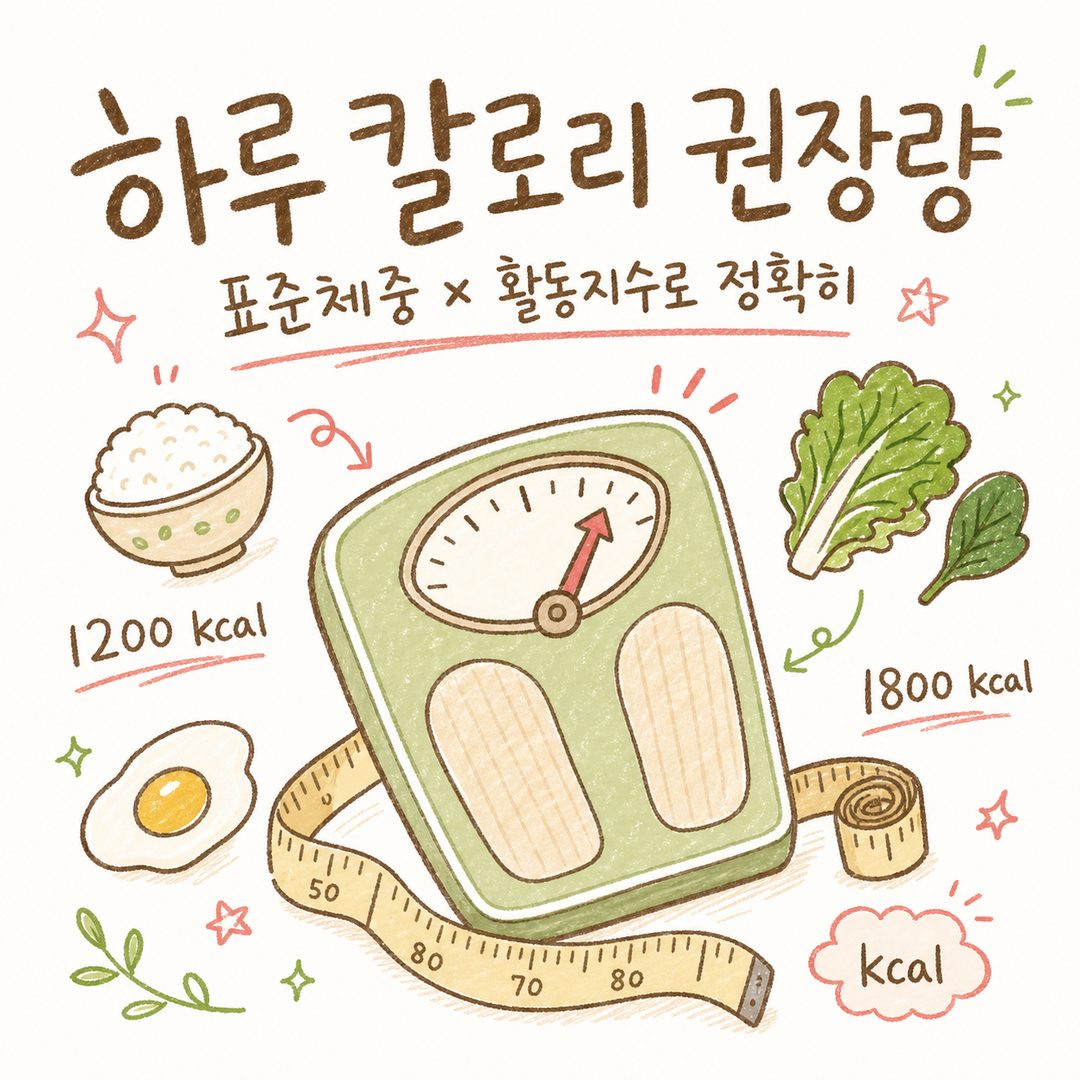
Daily Calorie Intake Guide: From Standard Weight to Diet

Table of Contents
Patients often ask me, "Doctor, I've started my weight management journey, but how many calories should I actually consume daily?" I remember feeling overwhelmed by the varying numbers when I first studied nutrition. Today, I'll explain the confusing topic of daily calorie recommendations just as I do in my clinic.
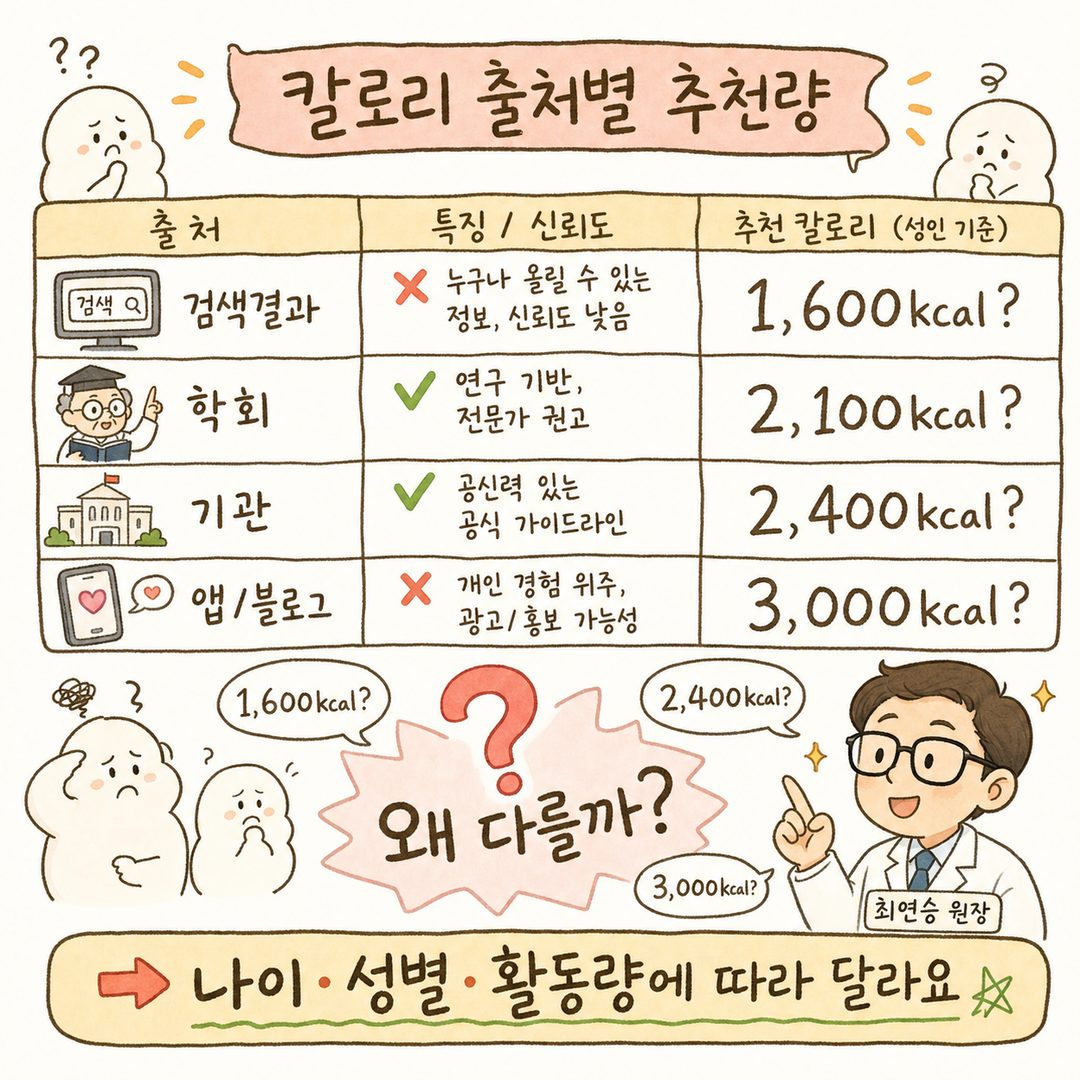
Why Is My Daily Calorie Intake So Confusing?
When you first search, you might find recommendations ranging from 1,600 to 3,000 kcal. This isn't because the information is wrong. Daily calorie needs vary based on age, gender, height, weight, and activity level. According to comprehensive domestic and international data, most adults fall within approximately 1,600-3,000 kcal per day.
It wouldn't make sense for an office worker and a delivery driver with the same height and weight to consume the same amount. The key is finding the right number for "your body."
Average Recommended Calorie Intake for Adults
Let's start with the most commonly cited averages. The average recommended daily intake often suggested in domestic sources is approximately 2,000-2,100 kcal/day for women and 2,400-2,500 kcal/day for men. Other sources show similar trends with 2,000 kcal for women and 2,700 kcal for men.
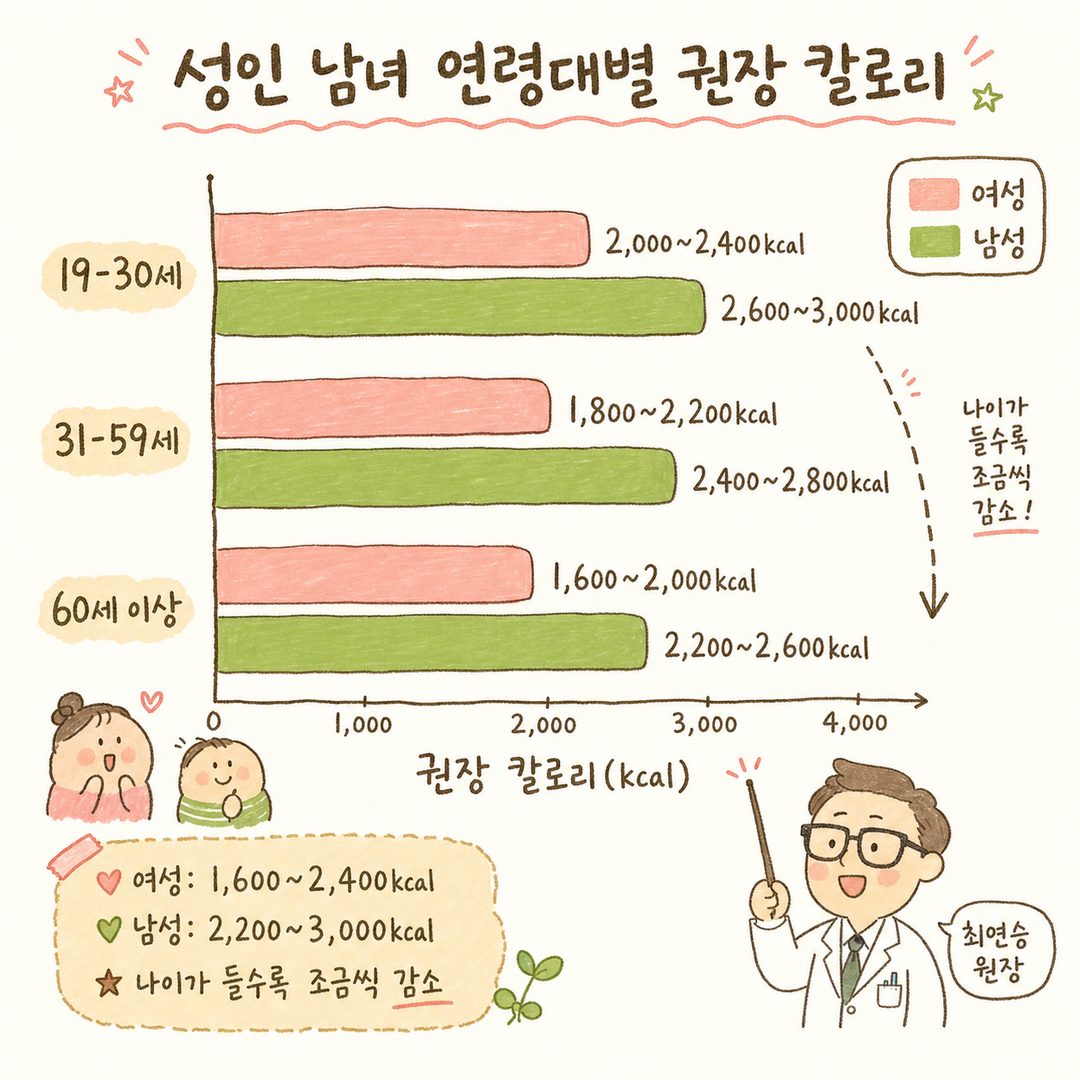
Breaking it down by age group shows more distinct differences. Based on moderate activity levels:
- Women 19-30 years: 2,000-2,400 kcal
- Women 31-59 years: 1,800-2,200 kcal
- Women 60+ years: 1,600-2,000 kcal
- Men 19-30 years: 2,600-3,000 kcal
- Men 31-50 years: 2,400-2,800 kcal
- Men 50+ years: 2,200-2,600 kcal
Many people complain about gaining weight in their 40s despite eating the same as in their 20s. As we age and become less active, our calorie needs naturally decrease. Maintaining the same diet will inevitably lead to weight gain.
Calculating with Standard Weight × Activity Factor
If averages aren't enough, try the formula commonly used in hospitals and academic societies: "Standard Weight × Activity Factor."
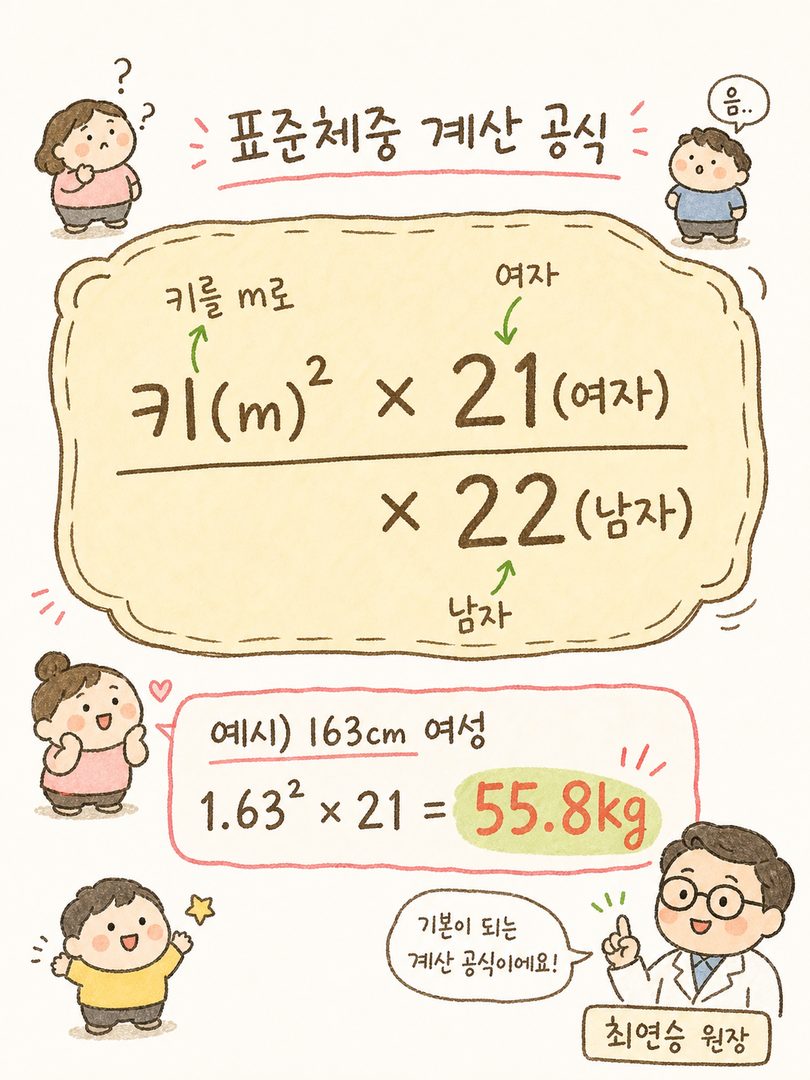
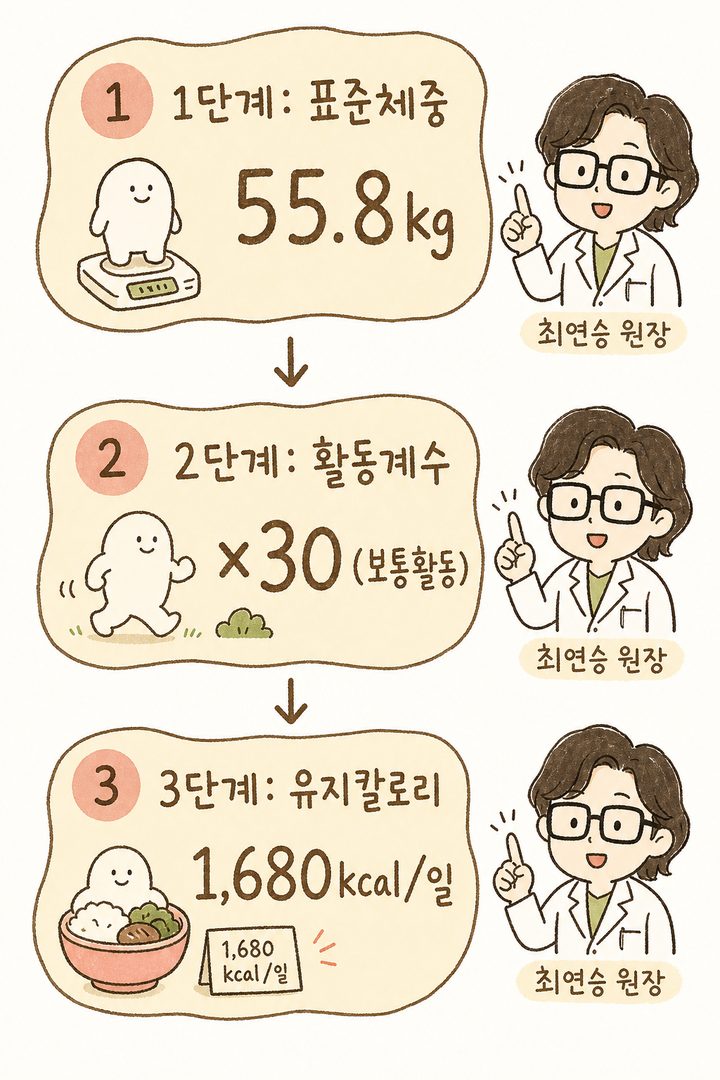
Standard weight is calculated by converting height to meters, squaring it, and multiplying by 22 for men or 21 for women. For a 163cm woman: 1.63² × 21 ≈ 55.8kg.
Multiply this by an activity factor that matches your lifestyle, based on Korean Diabetes Association standards:
- Sedentary, mostly sitting — × 25-30 kcal/day
- Moderate activity, light exercise or frequent movement — × 30-35 kcal/day
- Intense physical activity, athletes or manual labor — × 35-40 kcal/day
For a standard weight of 56kg with moderate activity (×30): 56 × 30 = 1,680 kcal/day. This is your maintenance calorie level—the amount needed to maintain your current weight.

Real Case — Weight Management Calculation for a 56kg Woman
Let's consider a common case from the clinic: a 30-something woman, 163cm tall, working a sedentary office job with light walking. Using our formula, her maintenance calories are approximately 1,680 kcal/day.
To create a calorie deficit for weight management, you need to create a shortage. Generally, a 3,500 kcal deficit is needed to lose 0.5kg of body fat. Breaking this down daily, reducing intake by 500 kcal/day leads to approximately 0.5kg weight loss per week.
Subtracting 500 from 1,680 gives a weight management target of approximately 1,200-1,300 kcal/day. While this seems straightforward, many patients try to reduce this further, which often leads to plateaus and yo-yo dieting.

How We Approach This at Baekrokdam Korean Medicine Clinic
In Korean medicine, we believe that constitution affects how the body absorbs and metabolizes the same calories. Those with cold hands/feet, those who easily retain water, those with strong appetites, and those who stress-eat at night all require different approaches. This explains why some people lose weight on 1,500 kcal while others plateau.
I always tell my patients: calorie numbers are just the starting point. The values from standard weight and activity factors are estimates based on averages. You must also pay attention to your body's signals—fullness after meals, cold hands/feet, sleep quality, and bowel movements. After 2-4 weeks on the same diet, you'll see whether your body is adapting or plateauing.
Actionable Steps You Can Take Today
Here are some practical tips we recommend in the clinic:
- Calculate your standard weight first — height(m)² × 21 (women) or × 22 (men)
- Honestly assess your activity level — 25-30 for sedentary, 30-35 for active
- Start by reducing 500 kcal/day from maintenance; avoid drastic 1,000 kcal cuts
- Accept that 0.5kg per week is sufficient progress
- Track weight and condition every 2-4 weeks to monitor your body's response
- Pay attention to non-numerical signals like cold hands/feet, swelling, and fatigue
If calorie counting feels overwhelming, start by reducing portions to about 80% of your usual intake and prioritizing protein and vegetables. Consistent direction matters more than perfect numbers.
Think of daily calorie recommendations as a map for your weight management journey. When you can't find your way with just a map, you need someone to guide you. If you'd like personalized dietary and Korean medicine prescriptions tailored to your constitution, consider a Baekrok Gambi-jung consultation at Baekrokdam Korean Medicine Clinic. Together, we'll find the right calorie range and customized management strategy for your body. Let's listen to your body's story beyond the numbers.