

Konjac Bread Calories: 100g Energy, Fiber, and Selection

Table of Contents
- Konjac vs. Konjac Bread: Understanding the Calorie Difference First
- How Many Calories Are Actually in Commercial Konjac Bread?
- Why Do Konjac Bread Calories Vary So Much?
- Is Konjac Bread Truly Helpful for Diet/Weight Management?
- Konjac Bread from the Perspective of Baekrokdam Clinic
- Practical Tips for Choosing the Right Konjac Bread
- Conclusion — Your Body's Reaction is More Accurate Than Numbers
"I love bread, but I switched to konjac bread because I'm on a diet/weight management plan." I see many patients in the clinic who say this. However, many are startled when they actually look at the calories on the packaging. They assumed that since it contains konjac, it would naturally be low-calorie, only to find it's not much different from regular white bread.
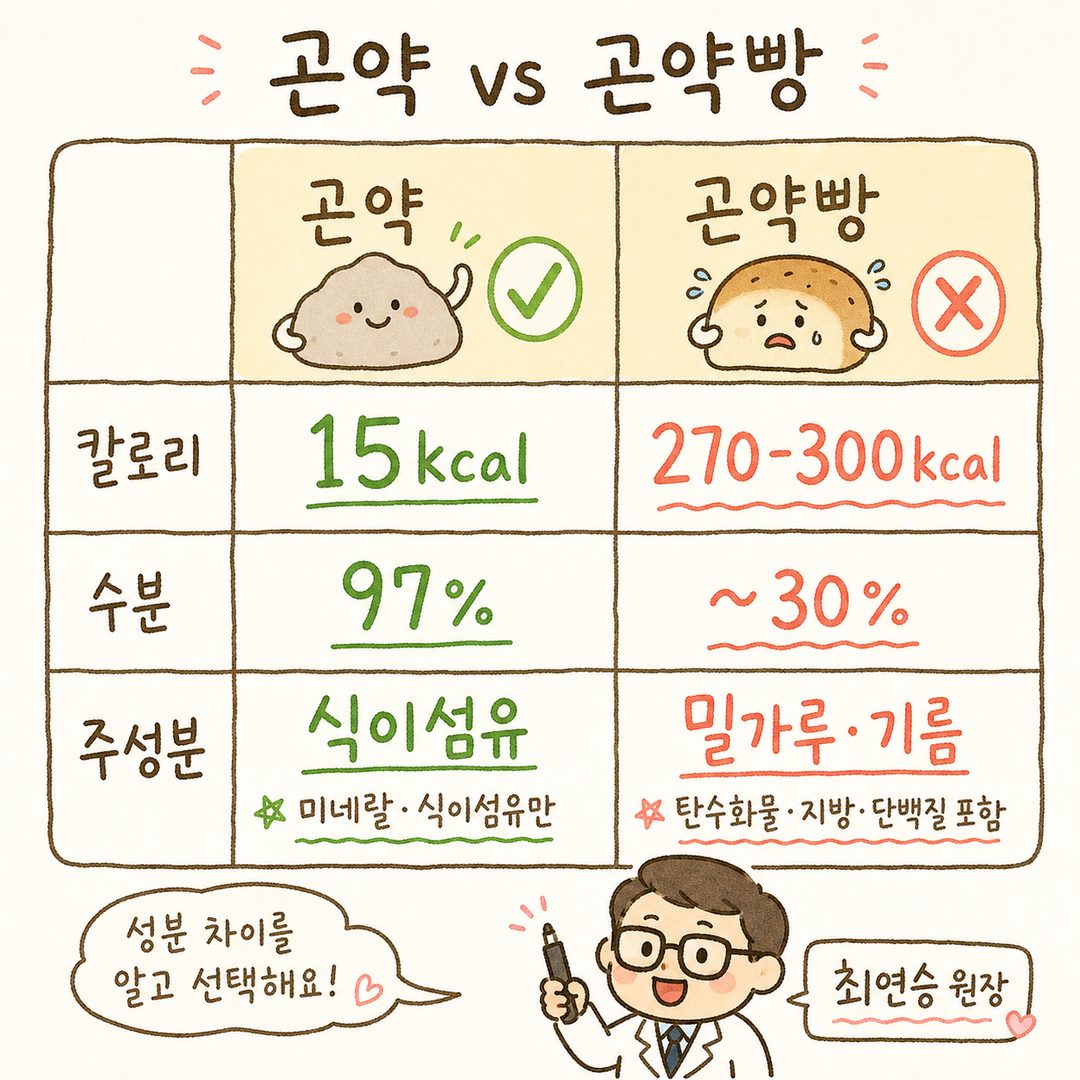
Konjac vs. Konjac Bread: Understanding the Calorie Difference First
Let's clear up a common point of confusion. Konjac itself and konjac bread are completely different foods. According to nutritional information, regular konjac is very low at about 15 kcal per 100g. Since about 97% is water and the rest is mostly dietary fiber and minerals, it effectively has almost no calories.
However, commercial konjac bread is around 270–300 kcal per 100g. This is almost the same as regular white bread. Even if konjac is included, the calories rise significantly because it still contains flour, oil, and nuts. You must start your diet/weight management journey with the correct understanding: "Konjac bread does NOT equal zero calories."
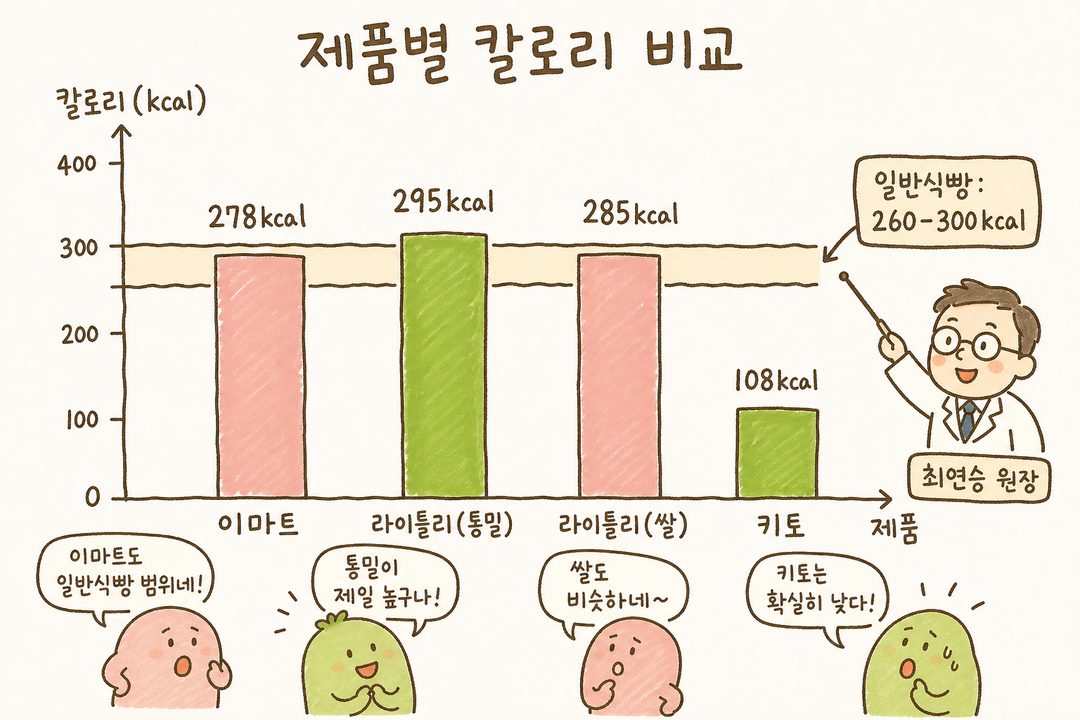
How Many Calories Are Actually in Commercial Konjac Bread?
Let's look at a few representative products based on nutritional information sites.
- Emart Konjac Grain Bread: 278 kcal per 100g serving, with 41.3g of carbohydrates, 10g of protein, and 7g of fat. The high carbohydrate ratio can cause a rapid spike in post-meal blood sugar.
- Lightly Konjac Whole Wheat Ciabatta: 295 kcal per 100g, with 43g of carbohydrates, 11g of fat, and 11g of protein.
- Lightly Konjac Rice Ciabatta: 285 kcal per 100g, with 43g of carbohydrates, 12g of protein, and 9g of fat.
For comparison, regular white bread is usually around 260–300 kcal per 100g. Konjac bread is either slightly lower or roughly the same. Among konjac breads designed with a keto concept, there is a product with 58.2 kcal per 54g serving. When converted to 100g, this is about 108 kcal, which is less than half the calories of standard konjac bread.
Why Do Konjac Bread Calories Vary So Much?
When looking at product labels, the range for "konjac bread" is dizzyingly wide, from 60 to 300 kcal per 100g. The reason is simple: the base ingredients used in the bread are different.
The key is how much konjac powder (glucomannan dietary fiber) was added and how much flour was reduced. Some products use almost no flour or are entirely flourless and gluten-free, reducing both starch and gluten intake. Products that use whole wheat or rice flour as the main base and only use konjac as a supplement stay at about 70–80% of the total calories of regular bread.
Dietary fiber content also varies greatly. Japanese ABS konjac bread contains 6g of dietary fiber per piece (45g), which is equivalent to about 2.4 heads of lettuce. Eating just one or two of these can be quite satiating in terms of fiber. Conversely, products with low konjac content can be considered almost identical to regular white bread.
Is Konjac Bread Truly Helpful for Diet/Weight Management?
The advantages are clear. The glucomannan fiber in konjac expands as it absorbs water and creates viscosity, staying in the stomach longer. This helps maintain satiety. This is also why konjac is frequently utilized in obesity and diabetes diets in Korea.
However, I must honestly mention some precautions. If you eat konjac bread limitlessly, the results won't be much different from eating regular bread. If you eat several slices of konjac bread containing 278–295 kcal per 100g and add jam or butter, your carbohydrate and fat intake for the day will skyrocket. In many cases, the post-meal blood sugar response is not significantly different from regular bread.

Konjac Bread from the Perspective of Baekrokdam Clinic
I always tell those who bring up konjac bread in the clinic: when looking at a diet/weight management plan in Korean medicine, we don't just look at a single calorie number. Even when eating the same konjac bread, some people feel comfortable and find relief from constipation, while others feel bloated and gassy. This is all due to differences in constitution.
Those who usually have cold hands and feet and weak digestion may feel a heaviness in their stomach if they consume too much konjac, which has a cold nature and is high in fiber. Conversely, those with a constitution prone to high internal heat and "damp-phlegm" (濕痰) can benefit from using konjac bread appropriately to feel full and manage swelling.
It's not about whether konjac bread itself is good or bad; the starting point of a Korean medicine diet is adjusting the amount and frequency to suit your constitution and digestive capacity.

Practical Tips for Choosing the Right Konjac Bread
Here are the points you can apply right now:
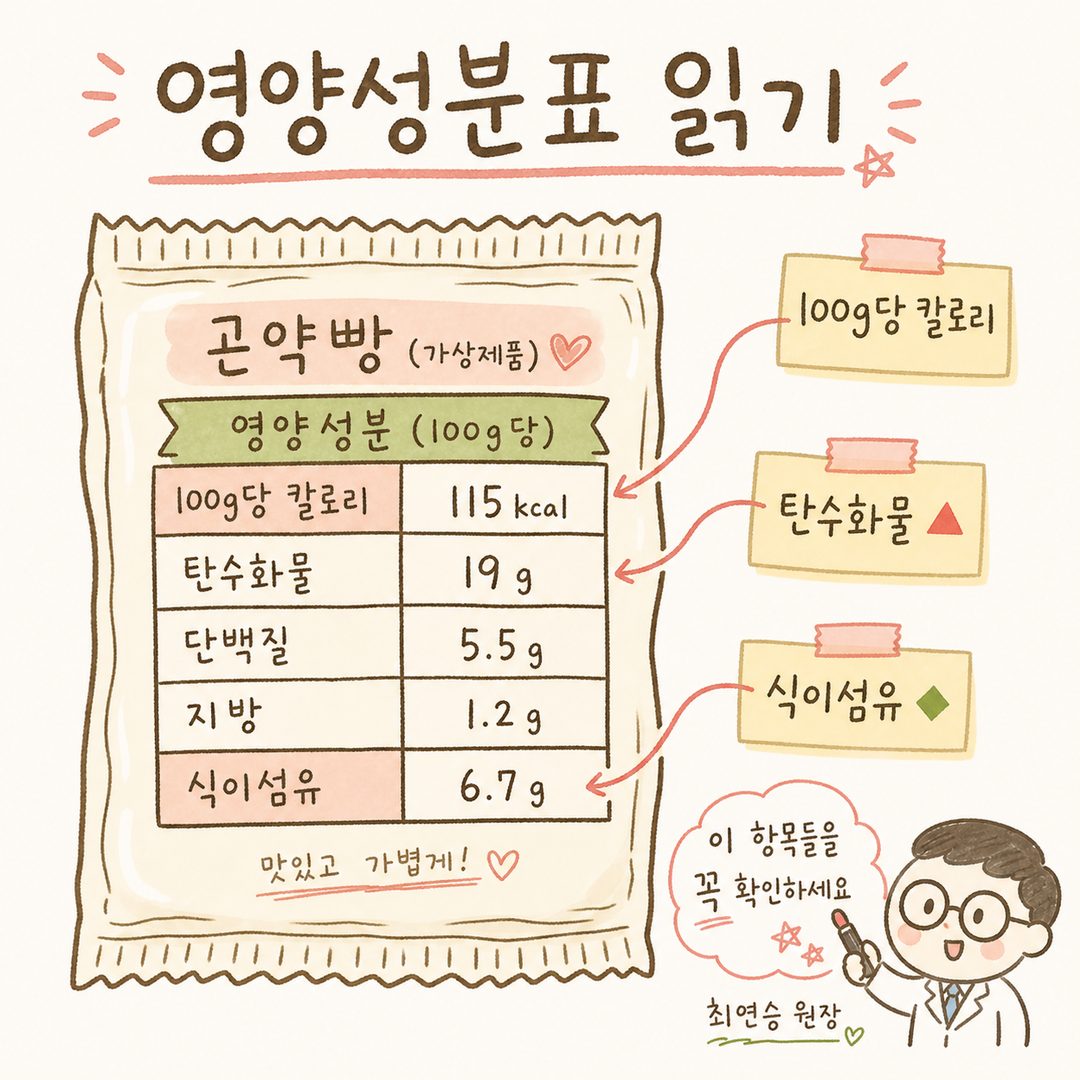
- Check the calories per 100g on the nutritional label first. For diet/weight management purposes, I recommend products with 150 kcal or less per 100g and low carbohydrates/sugars.
- Choose products that list dietary fiber content. There should be enough fiber per serving to make a difference in satiety.
- Look at both the konjac content and the flour content. If konjac is listed far down in the ingredients, it is effectively regular bread.
- Do not load up on toppings like jam, butter, or cream cheese. Lowering the calories of the bread is pointless if the toppings bring them right back up.
- Decide on a single serving size in advance and eat it with a protein side dish. This will result in fewer blood sugar fluctuations.

Conclusion — Your Body's Reaction is More Accurate Than Numbers
Konjac bread is certainly a useful tool if chosen well. However, the moment you eat it limitlessly with the mindset that "it's safe because it contains konjac," it becomes no different from eating regular bread. Even with the same konjac bread, results vary significantly depending on your constitution, digestive capacity, and usual eating habits.
If you feel overwhelmed while planning your diet/weight management alone, feel free to come in for a consultation. At Baekrokdam Clinic, we provide diet/weight management care that manages appetite, digestion, and swelling through constitutional diagnosis and Baekrok Gambi-jung. If we determine together how to best utilize everyday foods like konjac bread, you will see a path that you can maintain steadily without overexertion.