

Oven-Roasted Chicken Breast: Tips for Juicy Results

Table of Contents
Many find oven-roasted chicken breast too dry or bland. In my clinic, I often hear patients complain, "It's so tough I can't even swallow it" while discussing their diet/weight management plan.

Oven-Roasted Chicken Breast Basics — Temperature and Time
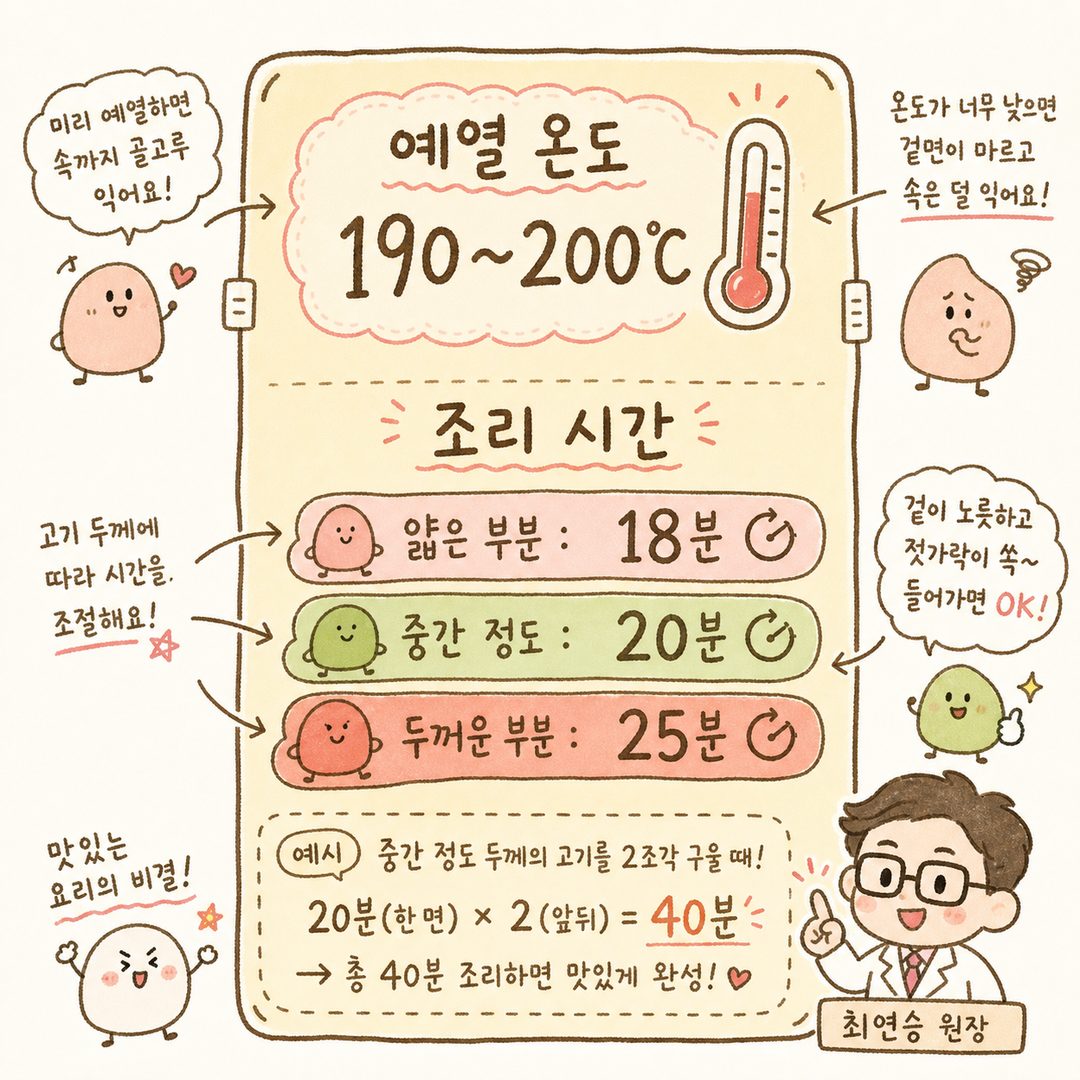
Let's start with the most confusing part. According to various recipes, chicken breast stays juicy when roasted in an oven at 180–200°C for about 18–25 minutes. The time varies depending on the thickness: around 18 minutes for thin pieces and up to 25 minutes for thicker ones.
Some blog recipes recommend preheating to 190°C and roasting for 18–20 minutes, flipping once halfway through, while others suggest finishing at 200°C for around 20 minutes. Since there isn't just one correct answer, you need to consider both your oven's power and the thickness of the meat.
Why Does It Keep Getting Dry?
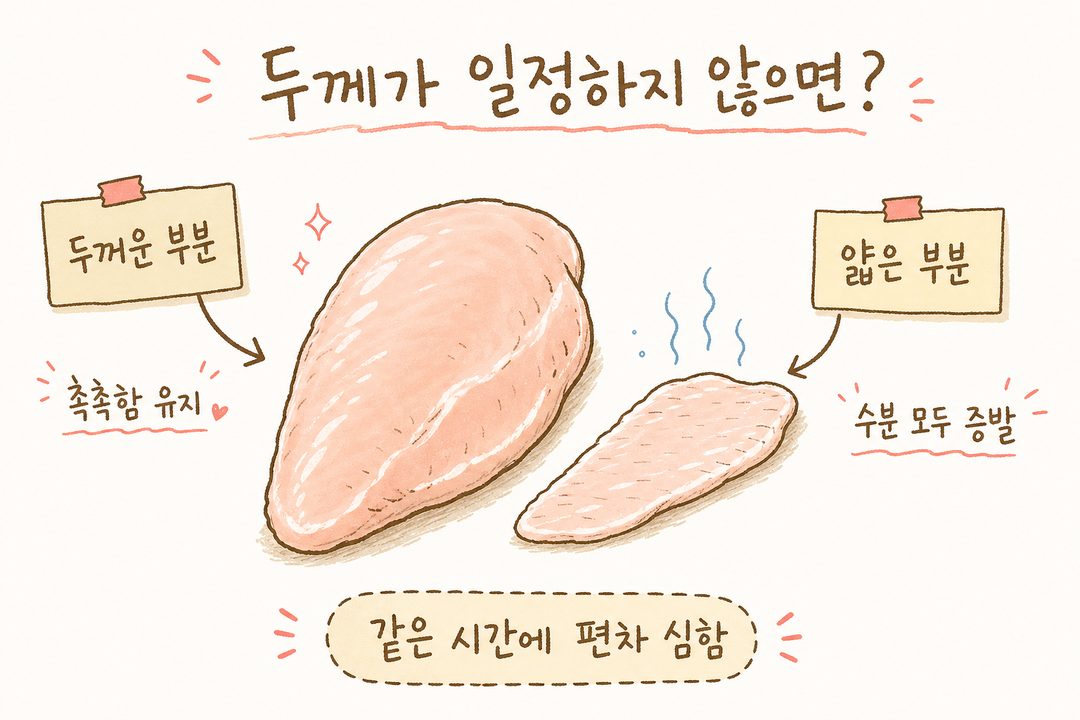
Even if you roast it for the same amount of time, some days it's tender, and other days it's hard to swallow. The biggest reason is inconsistent thickness. If you increase the time to cook the thickest part, the thinner sections will have already lost all their moisture.
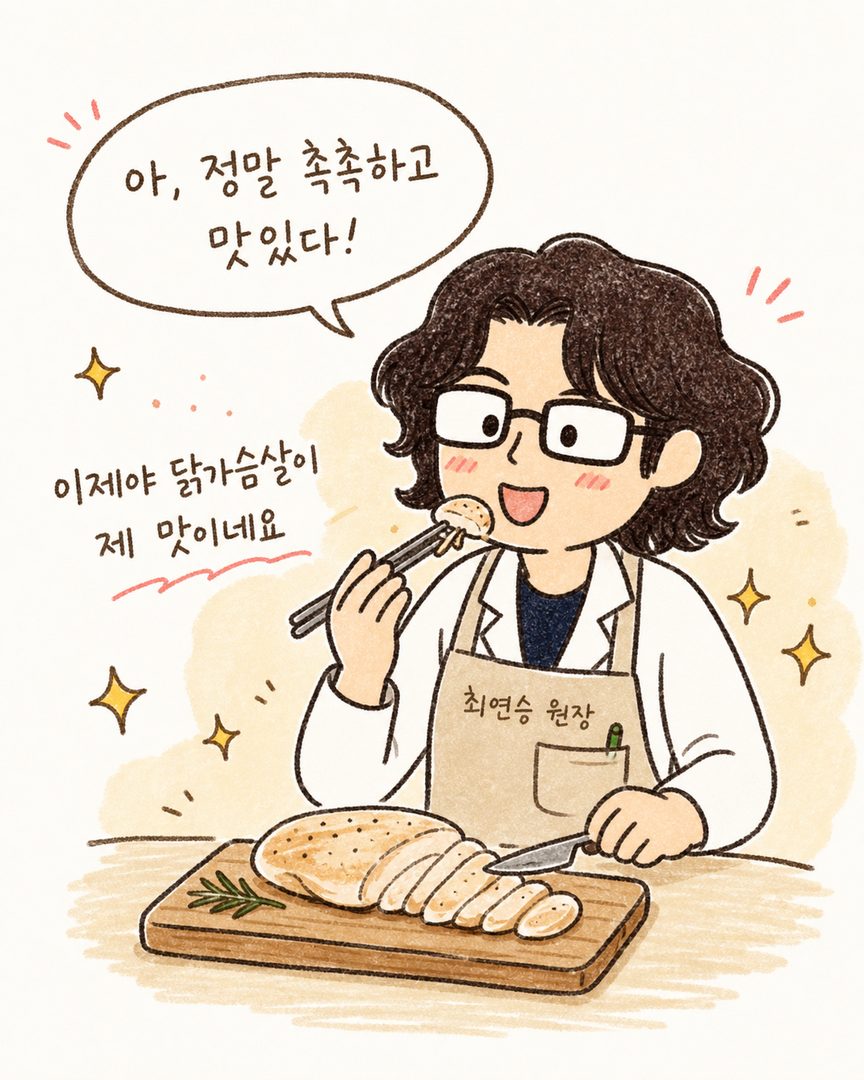
Adding just one step—leveling the thickness as much as possible with a knife or meat mallet before roasting—can significantly change the texture. Also, if you cut into it immediately after cooking, the juices will leak out onto the cutting board. Resting the meat for about 5 minutes reduces juice loss and makes it much more moist.
Putting It into Practice — Ingredients and Steps
Here is a common setup for two people:
- 2–3 chicken breasts, approx. 300–400g
- 1 tbsp olive oil
- 1 tsp salt, a pinch of pepper
- Optional: Garlic/onion powder, herbs like rosemary or thyme
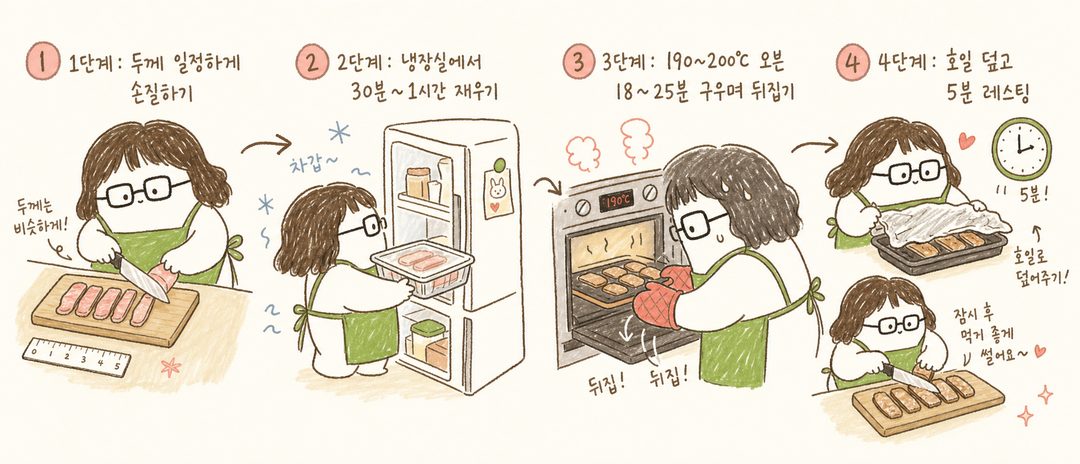
Marinating in the refrigerator for 30 minutes to 1 hour allows the seasoning to penetrate deep and slows down surface drying. For even juicier results, you can use the brining method: dissolve 1/4 cup of salt in 1L of room-temperature water and soak the meat for 15 minutes. Since this can increase saltiness, it's safer to avoid adding extra salt afterward.
Preheat the oven, place the chicken breast inside, and roast at 190–200°C for 18–20 minutes (up to 25 minutes if thick), flipping once. After removing it, cover loosely with foil to rest, then slice against the grain for a much softer texture.
A Quick Look at Nutrition
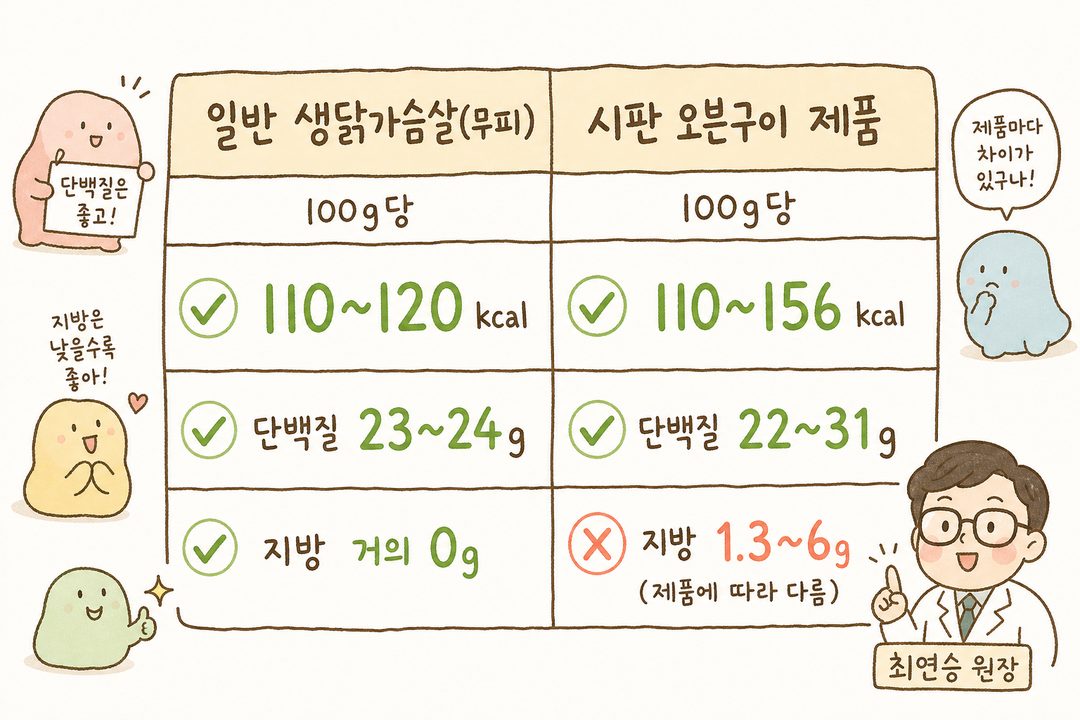
Those who include chicken breast in their diet/weight management plan are most curious about calories and protein. According to the Ministry of Food and Drug Safety's food composition table, raw skinless chicken breast contains about 110–120 kcal per 100g and 23–24g of protein.
Commercial oven-roasted products have a wider range. Per 100g, they contain approx. 110–156 kcal, 22–31g of protein, and 1.3–6g of fat. For example, one brand's original oven-roasted chicken breast is 110 kcal per 100g, while another product is 156 kcal with 31g of protein and 3.6g of fat. Products with added sauces can go up to 158 kcal per 100g with 4g of carbohydrates, 22g of protein, and 6g of fat. Goobne Whole Chicken Breast (Original) contains 130 kcal, 28g of protein, and 1.3g of fat per 110g serving.
Since the nutritional profile of "oven-roasted chicken breast" changes significantly depending on the presence of sauce, it's a good habit to check the nutrition facts when buying them.
A Word from Baekrokdam Clinic's Perspective
In Korean medicine, we do not recommend a diet/weight management plan that simply cuts calories. You must maintain your energy and vitality while losing weight. Chicken breast is a reasonable choice for meal replacement or protein supplementation because it is high in protein and relatively low in calories.
However, some people experience bloating or a loss of appetite when eating only chicken breast for every meal. In the clinic, I advise these patients to change their cooking methods. Roasting it tenderly in the oven and eating it with vegetables and whole grains makes digestion much easier, even with the same amount of food. Since the degree of protein absorption and the best time to consume it varies by constitution, it helps to monitor your own condition.
Action Points to Try Starting Today
I've explained a lot, but it boils down to just a few points:
- Level the thickness of the chicken breast and preheat the oven.
- Roast at 190–200°C for 18–20 minutes (up to 25 if thick), flipping once.
- Always rest the meat for 5 minutes after roasting.
- Check the calories and protein per 100g when buying commercial products.
- Try eating one serving (2–3 pieces) at a similar time within your weekly meal plan.
Following these steps will significantly improve your satisfaction with your chicken breast diet/weight management.
Oven-roasted chicken breast is a great fit for those starting a diet/weight management plan because the tools are simple and it doesn't require much labor. However, if you are consistently following a diet but not losing weight, or if you feel fatigued despite eating enough, you may need an approach tailored to your constitution. At Baekrokdam Clinic, we analyze your eating habits and constitution to help you find your rhythm with Baekrok Gambi-jung. Don't struggle alone; feel free to come in for a consultation.