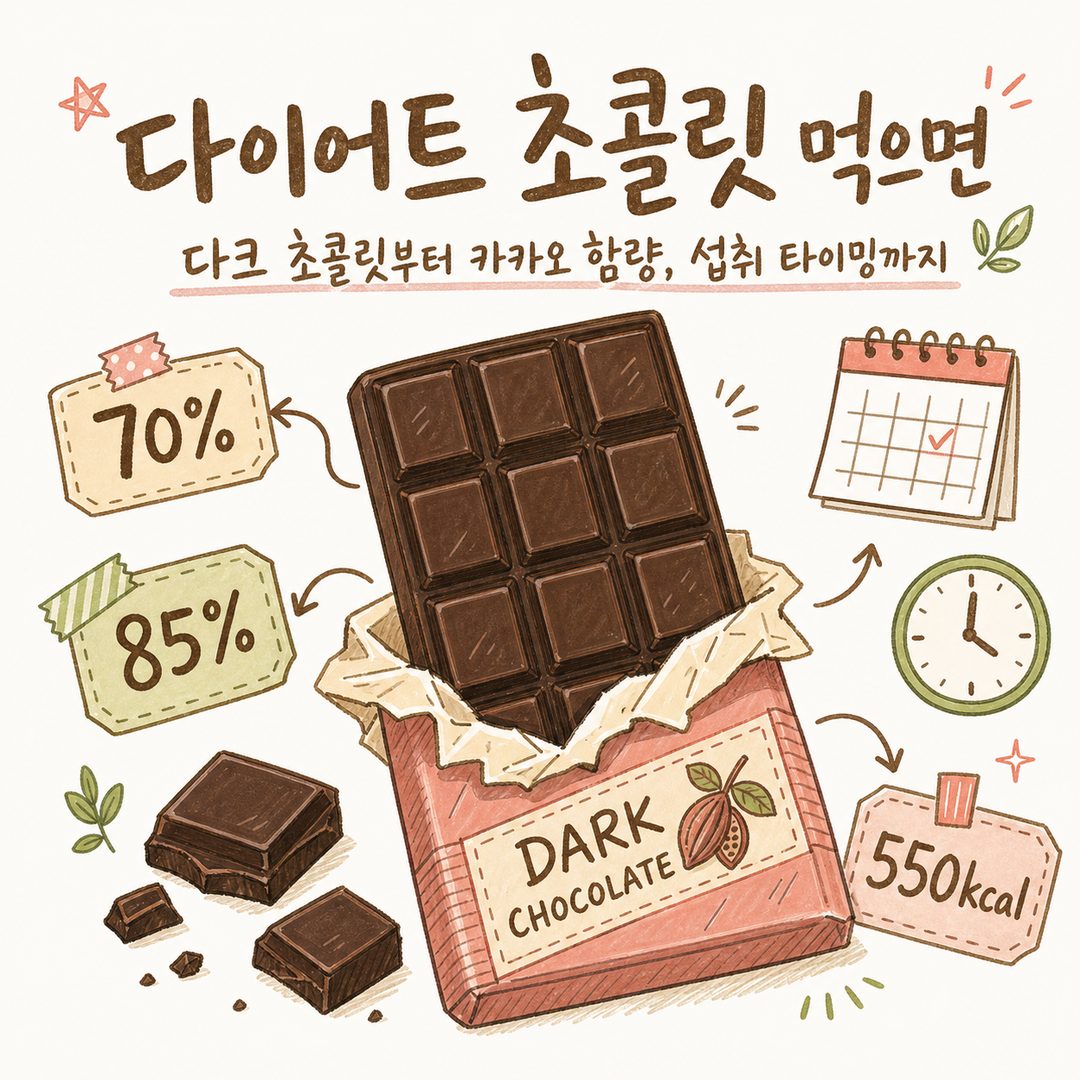
Eating Chocolate During Weight Management

Table of Contents
You're doing well with your diet until around 3 PM when sugar cravings hit. That's when chocolate becomes irresistible. "But it's diet chocolate," you say, eating one piece, then two, then finishing the whole row. That evening, you feel uneasy. In the clinic, I'm often asked, "Can I lose weight while eating chocolate?" Honestly, it's possible, but the conditions are quite strict.
Why Chocolate is Ambiguous During Weight Management
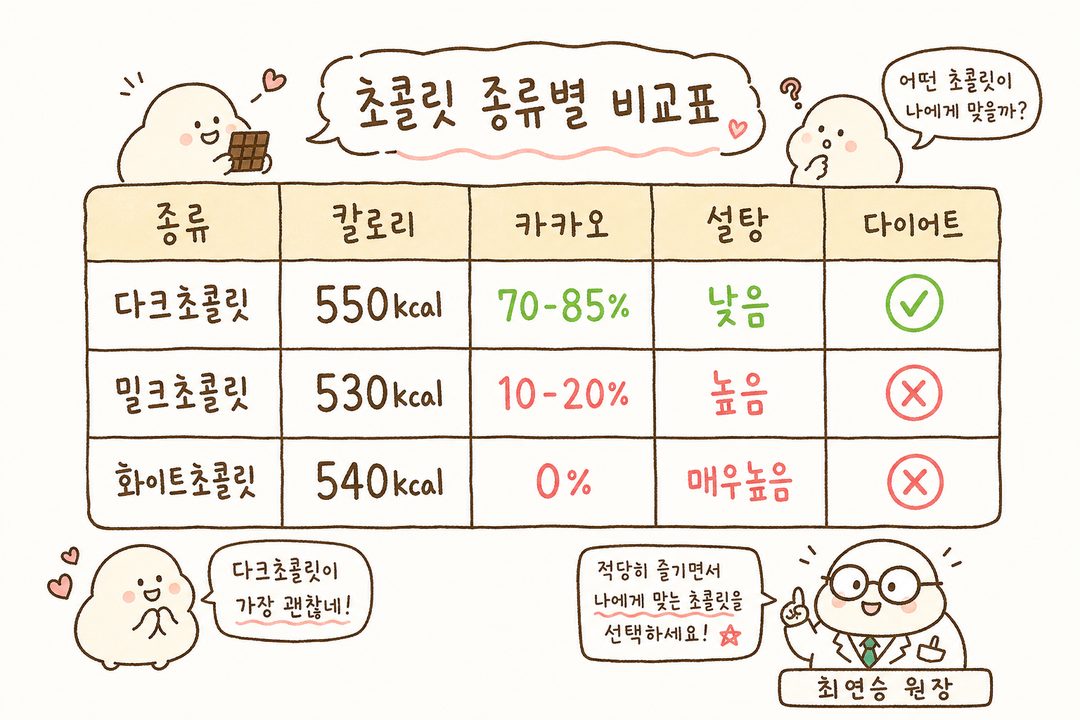
We all vaguely know chocolate isn't diet food. Nutrition data shows dark chocolate contains about 550kcal per 100g - almost the same as regular chocolate. If you think "it's dark chocolate, so it's fine" and eat the whole bar, the result is the same.
However, the story changes if you eat a small amount of dark chocolate with 70% or more cocoa. Food nutrition reports indicate that theobromine in dark chocolate stimulates leptin, an appetite-suppressing hormone. Flavonols and polyphenols abundant in dark chocolate have also been reported to improve insulin sensitivity and prevent obesity. Some Korean medicine blogs recommend even stricter standards: 85% or more cocoa, with simple ingredients like cocoa mass, cocoa butter, cocoa powder, vanilla, and minimal sugar.
The problem lies in commonly available milk chocolate, white chocolate, and products loaded with nuts and caramel. These contain more sugar and milk with less cocoa, making them almost like trap foods from a weight management perspective.
Different Amounts and Timing Yield Different Results
Reviewing patients' food diaries, I often see highly variable chocolate consumption - one piece some days, a whole bag others. This makes monthly averages unreliable. Recommended guidelines suggest limiting dark chocolate to 30-40g per day during weight management. 30-40g is about one small row or 3-4 pieces. Some sources conservatively recommend 20-30g daily. Either way, the "small amount" is smaller than most people think.
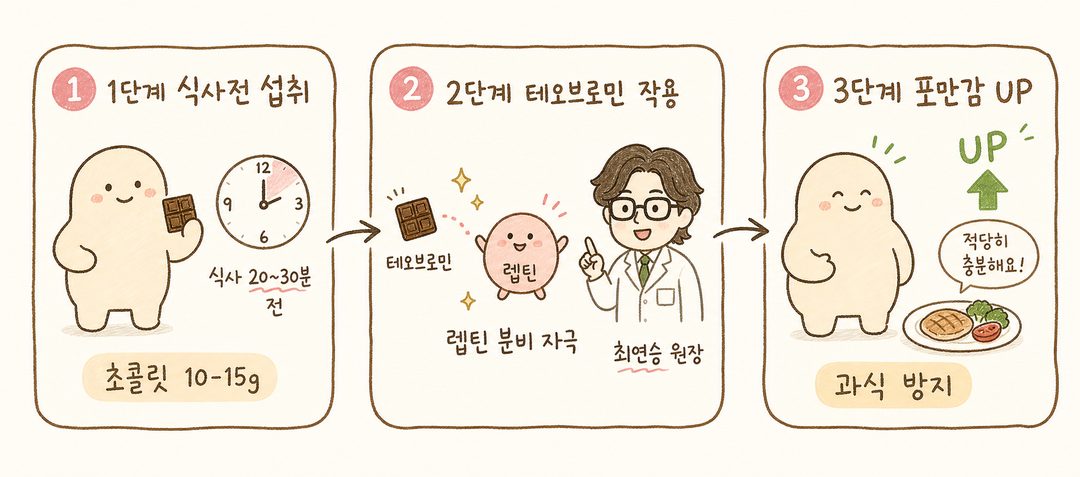
Timing matters too. Some reports suggest eating 10-15g about 20-30 minutes before meals helps theobromine stimulate leptin secretion, increasing satiety and reducing overeating. Consuming a small amount post-exercise may aid muscle recovery due to polyphenols. However, eating chocolate in the evening or as a late-night snack is discouraged due to increased fat storage potential. Your body processes the same piece of chocolate differently at 3 PM versus 11 PM.
Patients who switched to pre-meal consumption often report, "Strangely, my evening binges decreased." Satisfying sweet cravings in advance makes it easier to resist temptation at dinner.
Understanding Sugar Cravings from a Korean Medicine Perspective
In Korean medicine, sugar cravings aren't simply due to "lack of willpower." When spleen-stomach function weakens, the body craves sweets for energy. Stress-related liver qi stagnation can also trigger cravings for sweets and stimulating foods. That's why we first examine why patients experience intense sugar cravings.
Recommendations vary by constitution. Those with dampness-phlegm patterns might need to further reduce cocoa intake. For those with qi deficiency who feel sluggish in the afternoon, a small amount of cocoa before meals can provide temporary alertness. From a Korean medicine perspective, chocolate isn't a weight loss food - it's merely a tool to manage cravings and fill dietary gaps. The fundamental approach focuses on restoring spleen-stomach function and reorganizing eating habits.
In the clinic, we ask "how you eat it" rather than telling patients to quit chocolate. Often, the solution isn't abstinence but readjusting quantity and timing.
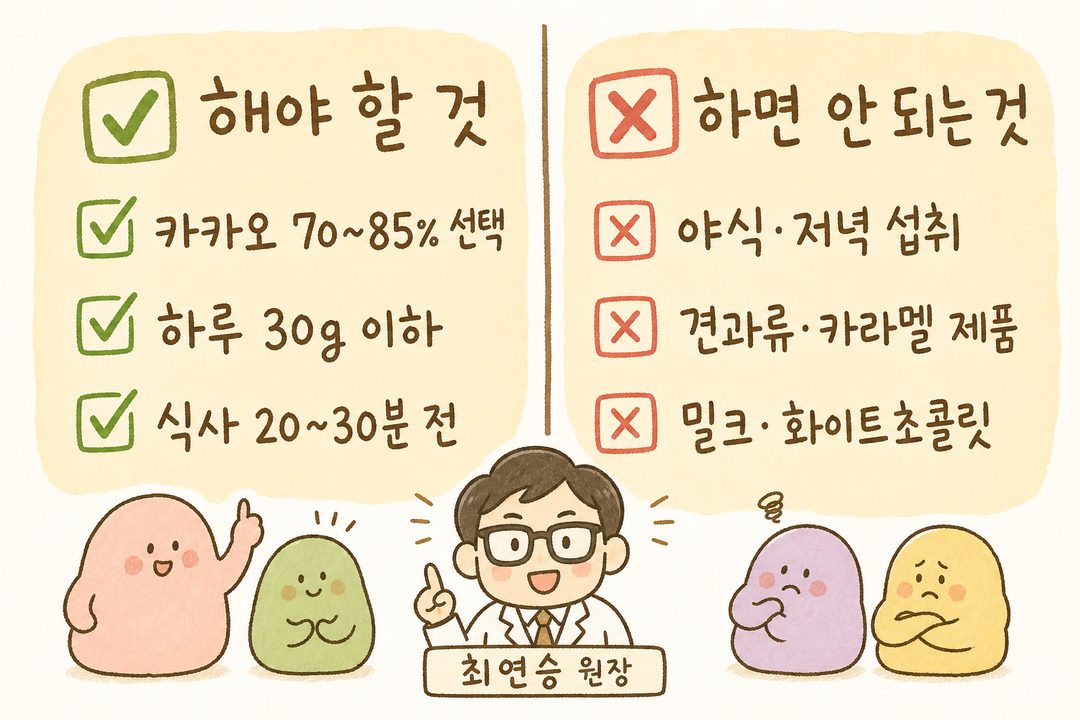
Practical Rules to Implement Starting Today
Here are some practical tips I often share with patients:
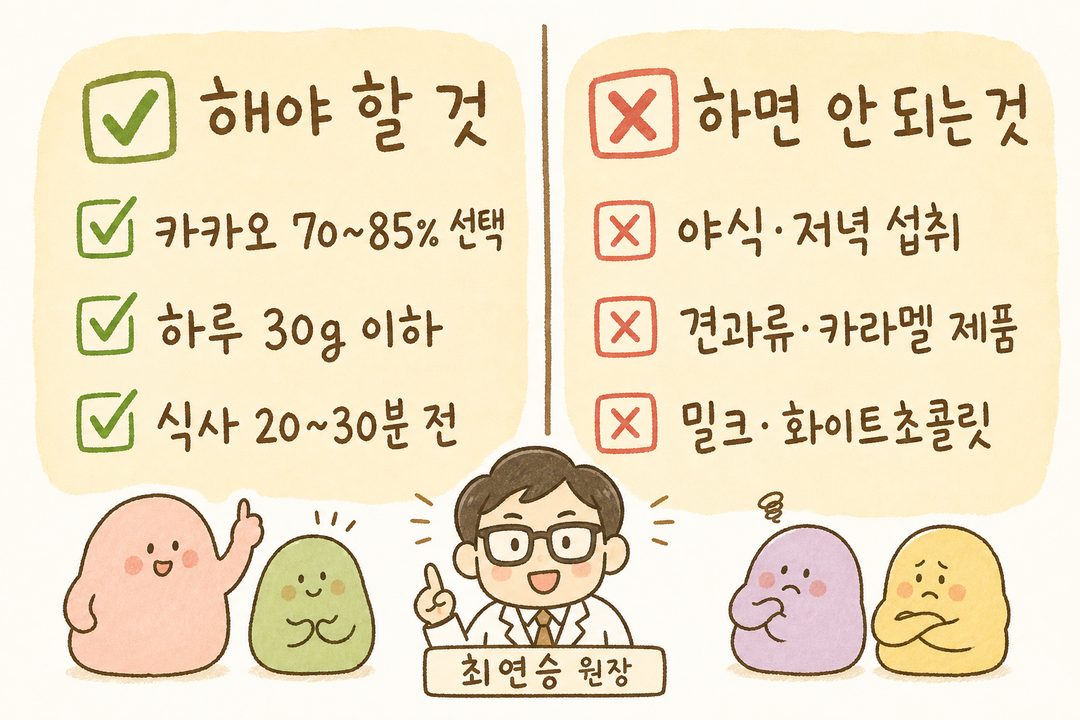
- At the store, check for 70-85% cocoa content first. Shorter, simpler ingredient lists are better.
- Set under 30g daily as your baseline. Pre-portioning into single servings makes it easier to stop.
- Eat 2-3 pieces 20-30 minutes before meals. Avoid late-night or pre-bed consumption.
- Avoid products with nuts, caramel, syrup, milk, or white chocolate during weight management.
- If intense sugar cravings occur frequently, it might indicate dietary imbalance or health issues rather than willpower. Check if you're getting enough protein and fiber.
Though these rules seem simple, patients who follow them for 1-2 months often report significant differences, including reduced frequency of sugar cravings.
Weight management isn't about "not eating" but "how to eat." While giving up a row of dark chocolate isn't the essence of dieting, re-evaluating daily calorie intake certainly helps. When planning meals alone, "this much should be fine" often accumulates, blurring monthly results. That's why I recommend our Baekrok Gambi-jung program, which combines constitution-based dietary coaching with Korean herbal medicine to address sugar cravings and binge eating patterns. Let's find the best approach together during your consultation.