
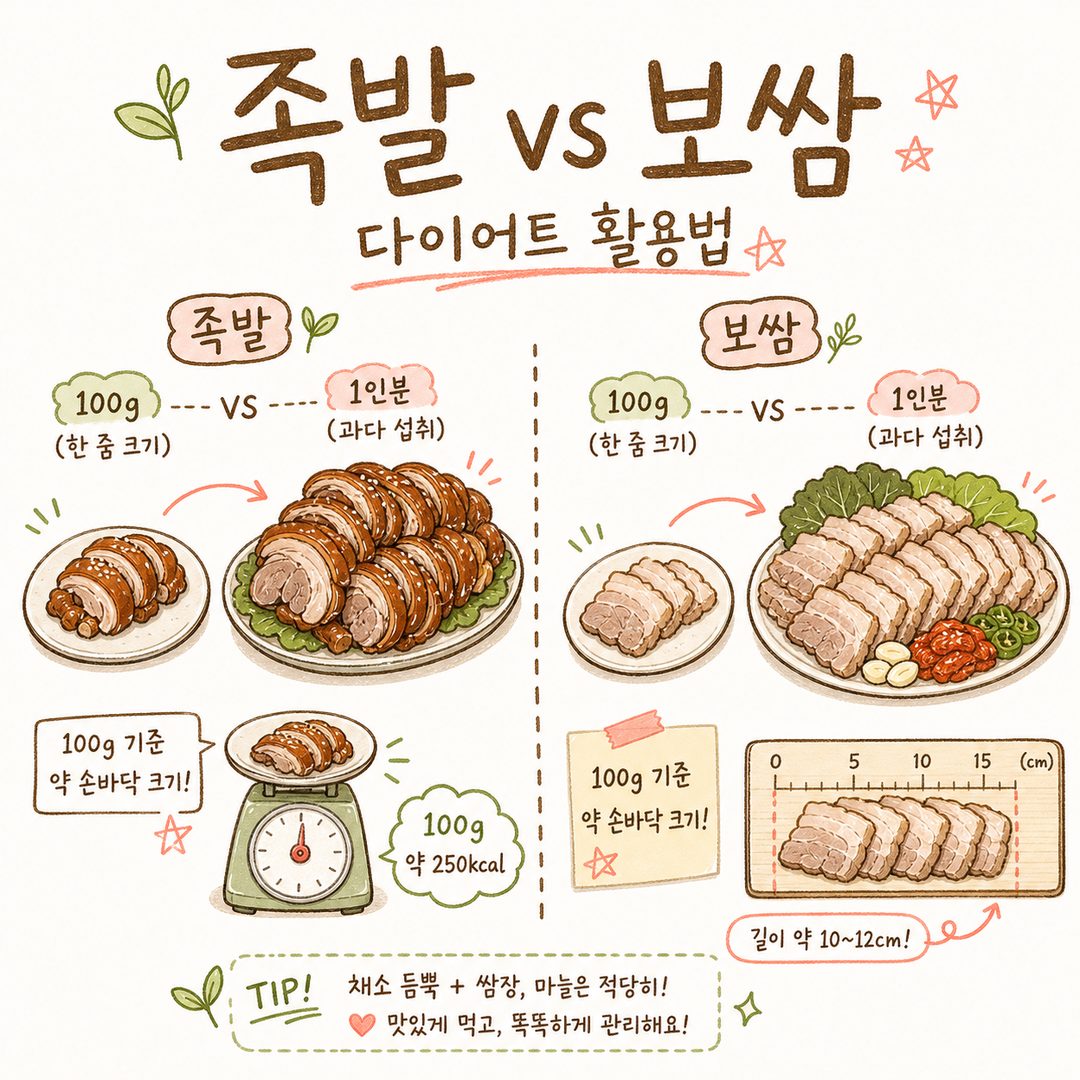
Jokbal & Bossam for Diet: Calories, Traps, and Tips

Table of Contents
"I'm craving jokbal or bossam tonight, but I can't decide because I'm on a diet." This is a common concern in the clinic. Tired of chicken breast and unable to avoid company dinners, many feel guilty about pork. Here is the answer: Jokbal and bossam are excellent protein options during weight management if you manage portions and combinations correctly.
Why Dieters Choose Jokbal and Bossam
Compared to fried chicken or grilled pork belly (samgyeopsal), the biggest appeal is that they are boiled meats. Because they are cooked in boiling water rather than fried or grilled in oil, some of the fat is rendered out during the cooking process. According to figures cited in Kyung Hee University research, boiling meat can reduce fat by up to 29% while only decreasing protein by 17%. This means that even with the same pork, the calorie burden is lower than when grilling. Being rich in protein, they provide long-lasting satiety and cause blood sugar to rise more slowly than carbohydrate-heavy meals, which is advantageous for your diet/weight management.
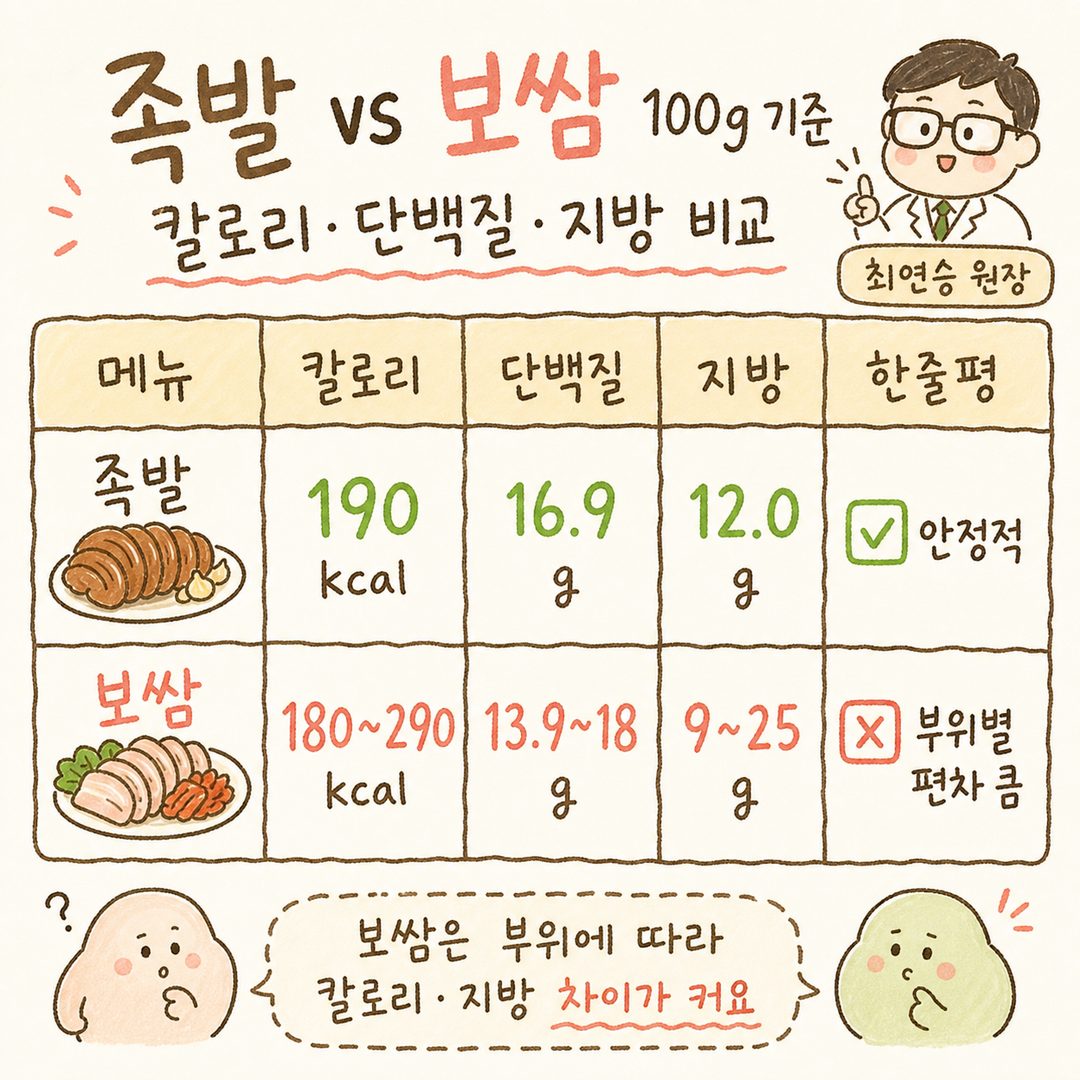
Jokbal vs. Bossam: 100g Nutritional Comparison
Looking at the numbers, the two seem similar yet have distinct differences. Jokbal contains approximately 190 kcal, 16.9g of protein, and 12.0g of fat per 100g. Bossam (boiled pork slices) has a wider range depending on the data, reported at 180–290 kcal, 13.9–18g of protein, and 9–25g of fat per 100g. This variation exists because the calories change significantly depending on whether the bossam is made from fatty pork belly or leaner cuts like the front leg or shoulder. From a diet/weight management perspective, the first fork in the road is "which cut of meat was boiled?"
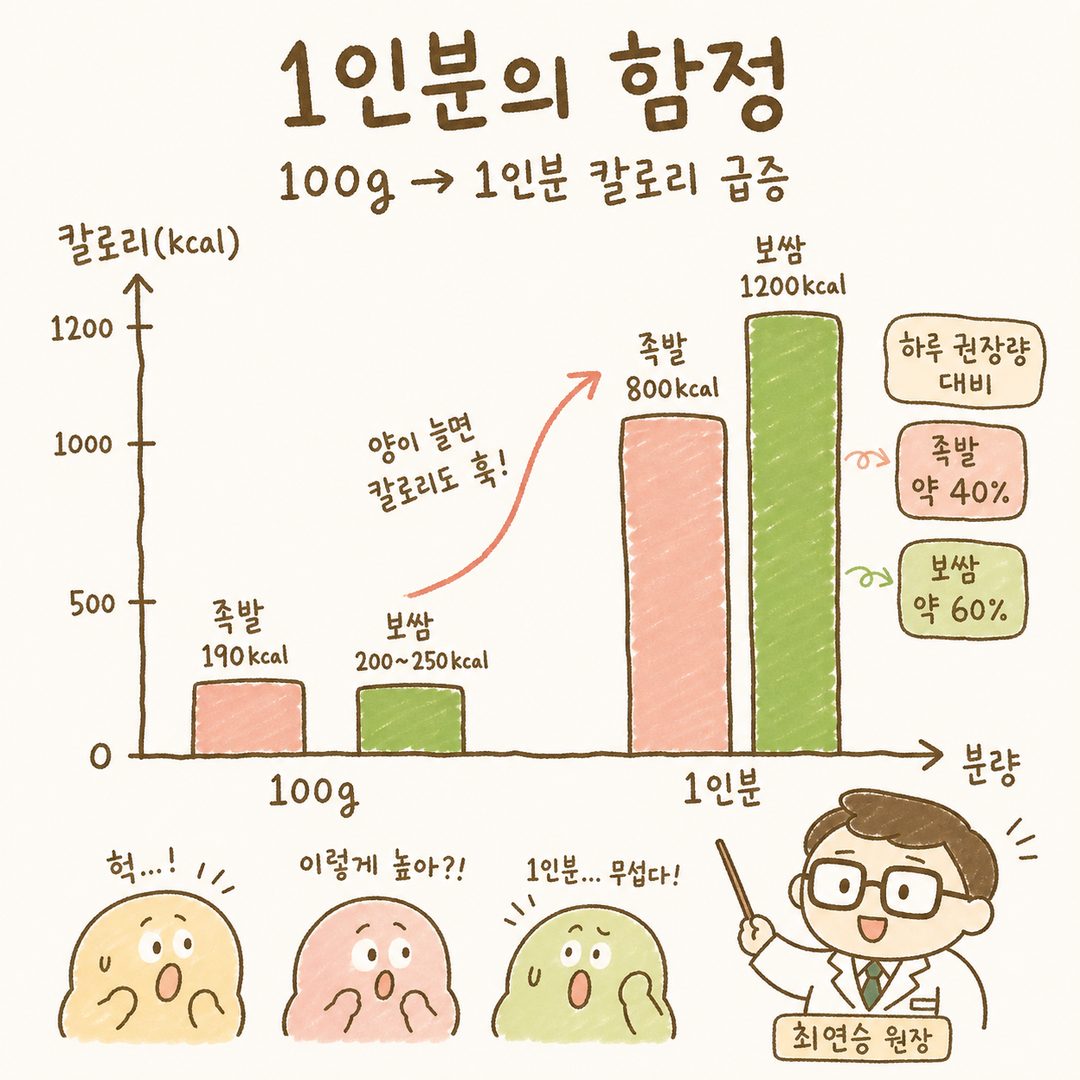
The Trap of a Single Serving When Eating Out
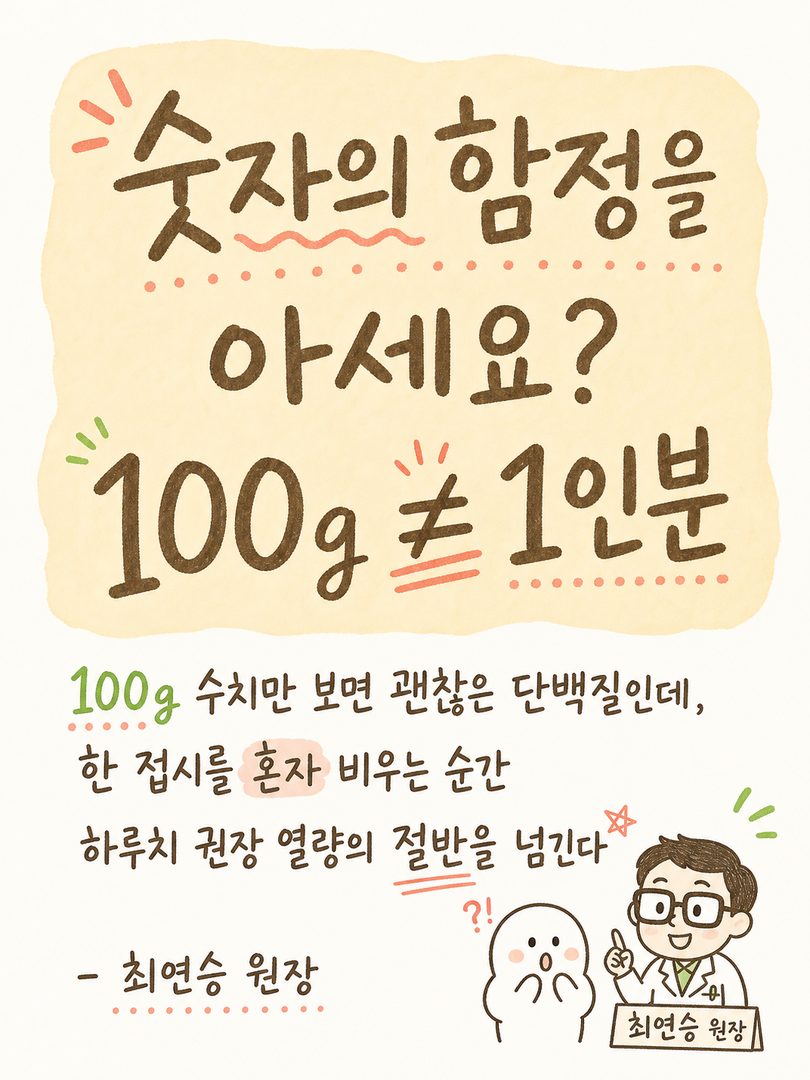
The problem is that calories skyrocket the moment you order a full serving. According to some data, one serving of jokbal is about 800 kcal, and one serving of bossam can reach nearly 1,200 kcal. A report by the Ministry of Food and Drug Safety, which compared 238 types of restaurant menus, even ranked bossam as the number one highest-calorie menu item per serving. While the 100g figure looks like "good protein," the moment you finish a whole plate alone, you've consumed more than half of your daily recommended intake. If you add spicy noodles (makguksu), rice balls, and soju to this, it stops being a protein-focused meal and simply becomes a binge.
The Perspective of Baekrokdam Clinic
In Korean medicine, we don't view those who struggle to lose weight simply as people who "eat too much." If the function of the spleen and stomach (bi-wi) is weak, digestion and metabolism stagnate even with the same amount of food. When phlegm-dampness and dampness stagnation (dam-eum/seup-che) accumulate, the lower body tends to swell and feel heavy. Menus with a certain amount of fat, like jokbal or bossam, can easily leave those with weak digestion feeling bloated. Therefore, in the clinic, we don't just say "don't eat it." Instead, we guide patients to adjust portions according to their constitution, digestive power, and edema patterns. Since these are high-protein, high-fat foods, they can be utilized, but it is often more important to determine the frequency and amount based on your individual constitution.
Practical Tips to Apply Right Now
Here are some small rules you can use immediately at company dinners or late-night snack gatherings:
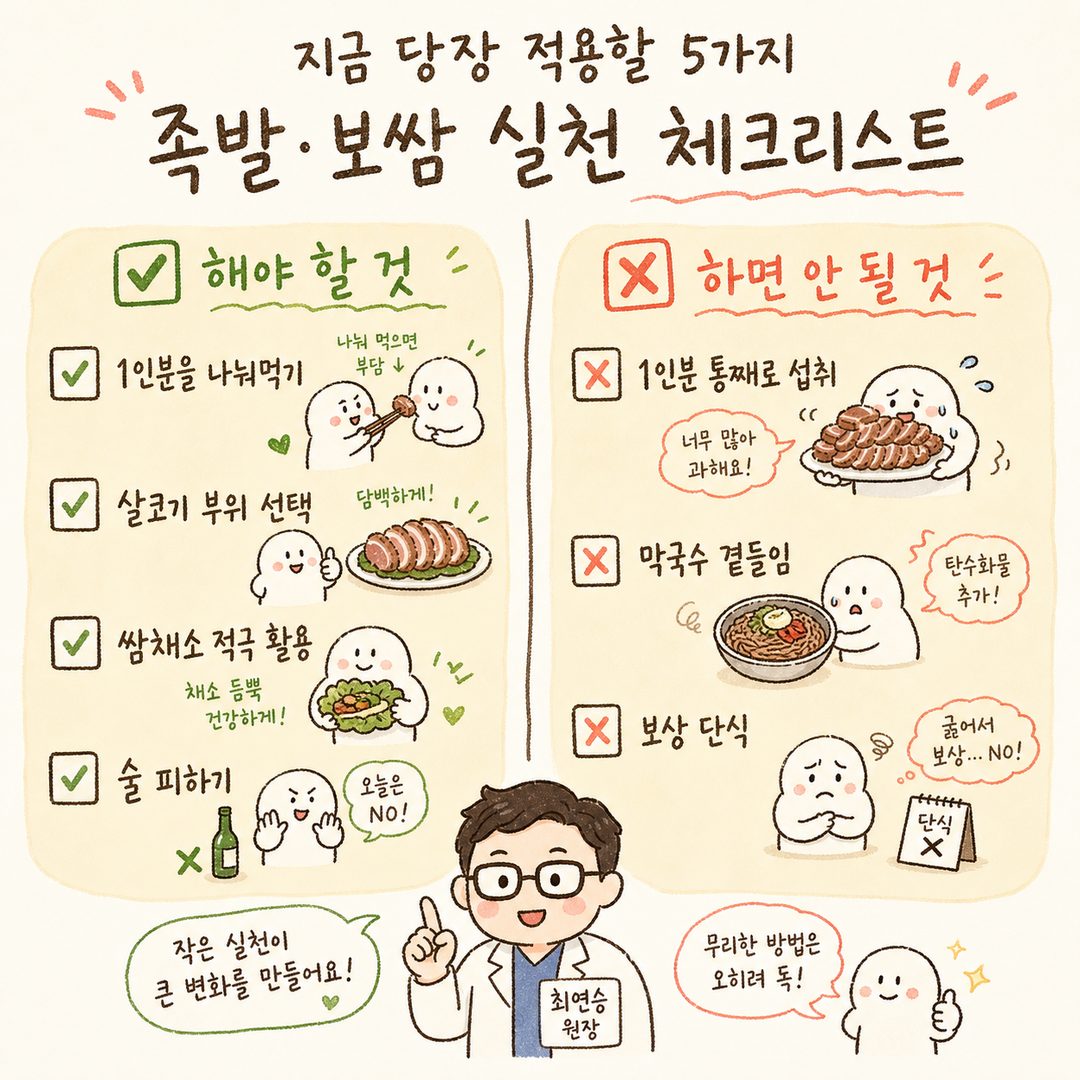
- Do not eat a whole serving by yourself. Aim for a 100g portion (about the size of your palm) as your protein for the meal, and share the rest or save it for the next meal.
- When choosing bossam, ask for lean cuts like the front leg or shoulder rather than the pork belly. The calories vary significantly even for the same menu item.
- Spicy noodles, rice balls, and ssamjang are the most dangerous traps. A single bowl of spicy noodles can instantly turn a protein meal into a carbohydrate bomb.
- Avoid drinking alcohol with your meal. When alcohol enters the body, fat burning is sidelined, and you are more likely to keep reaching for snacks.
- Actively use leaf wraps, pickled radish, and garlic. These help create satiety quickly and neutralize the greasiness.
Frequency and Planning the Next Meal
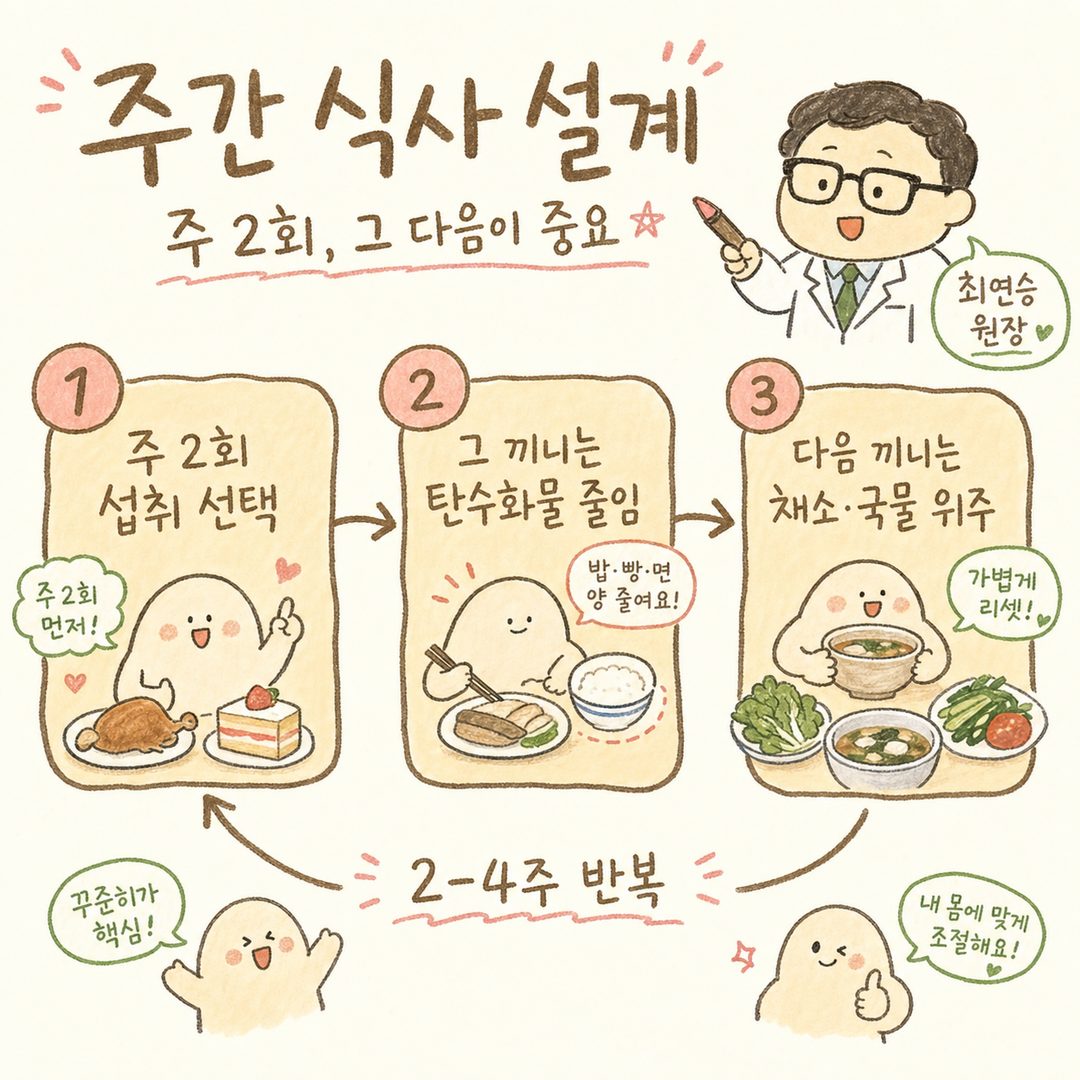
On a weekly basis, it is reasonable to set a limit of about two times per week. On the days you eat these, reduce carbohydrates for that meal and keep the next meal light, focusing on vegetables and clear soups. We do not recommend "compensatory fasting," such as "I ate bossam today, so I'll starve tomorrow," as this easily leads to binge eating. Keeping your usual eating rhythm while only adjusting the portion and side dishes of the meal containing jokbal or bossam is much more stable in the long run. If you maintain this pattern for 2 to 4 weeks, you will gain a sense of how to keep your weight graph from fluctuating wildly even when company dinners are scheduled.
Rather than cutting out jokbal and bossam unconditionally, adjusting the amount and frequency to fit your constitution and usual eating patterns is a realistic way to reduce stress during your diet/weight management. If you find it difficult to decide on your own, or if you feel unusually swollen and stagnant even when eating the same amount, we can help you check your constitution and eating habits through a Baekrok Gambi-jung consultation at Baekrokdam Clinic. We will help you find a path to lose weight gradually without adding guilt to every restaurant menu choice.