
Overcoming Weight Loss Plateaus: BMR & 7-Day Averages

Table of Contents
I often meet people in the clinic who sigh because the numbers on the scale haven't budged after nearly a month of weight management. I know that feeling of confusion and frustration all too well—the "What did I do wrong?" moment—better than anyone.
A Plateau Isn't Failure; It's Your Body's Adaptation Signal
A weight management plateau occurs mostly when the body adapts to a new weight, reaching a state where 'calories consumed = calories burned.' According to some reports, a plateau typically appears after losing about 16% of your body weight, while other data suggests many experience it around 4 weeks after starting a diet.

Our body perceives weight loss as a 'crisis' and adjusts to conserve energy. Even if you eat the same amount and perform the same exercise, the body is calibrated to reduce energy expenditure and burn less fat. This is called the homeostasis maintenance mechanism. Since it is a physiological response to keep weight stable, the plateau itself is a natural process. It is not a sign of failure, but rather a signal that your body is functioning correctly.
When BMR and Muscle Mass Drop Together, Progress Slows Down
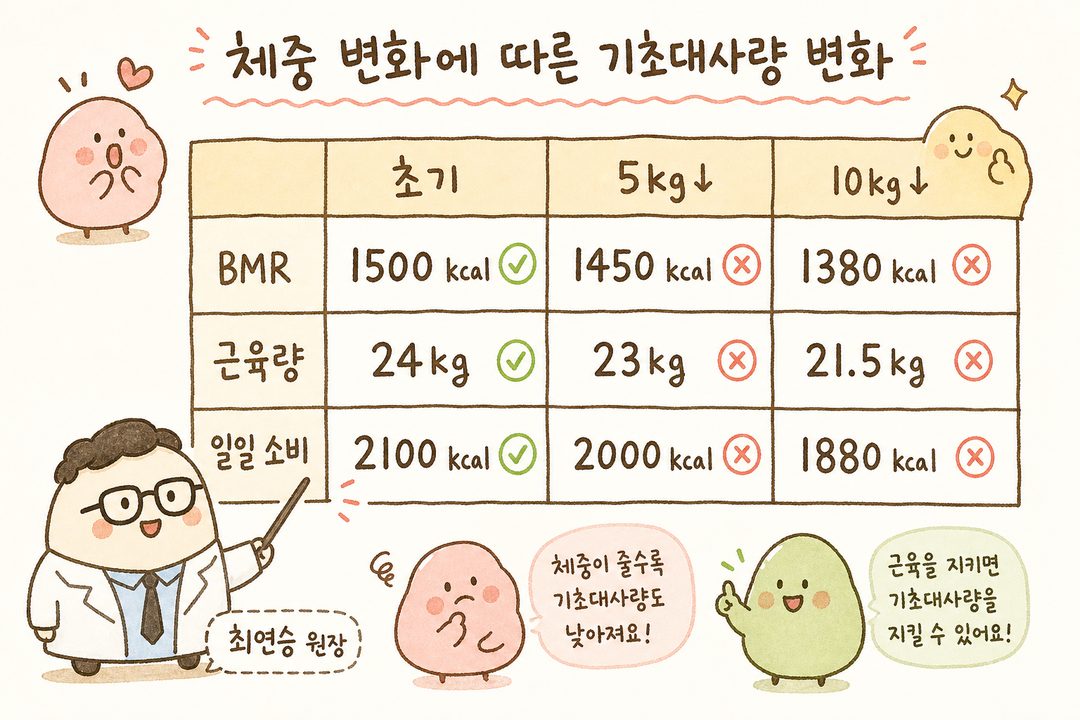
To identify the true cause of a plateau, we must discuss Basal Metabolic Rate (BMR). When weight decreases, the body decides it "needs less energy," and BMR naturally drops. In particular, if weight management leads to the loss of muscle along with fat, the metabolism decreases further in proportion to the lost muscle.
Muscle is a tissue involved in calorie burning; therefore, when muscle mass decreases, total daily calorie expenditure also drops, slowing the rate of weight loss. Reports consistently show that if protein intake and strength training are insufficient during a diet, muscle loss occurs alongside weight loss. It is actually quite normal for weight loss to slow down over time, even if you maintain the exact same diet.
Furthermore, people tend to estimate their calorie intake lower than it actually is. When snacks, drinks, and late-night meals creep back in, one might feel they are "eating the same," but in reality, the actual intake has often increased significantly.
How the Same Person Starts Losing Weight Again
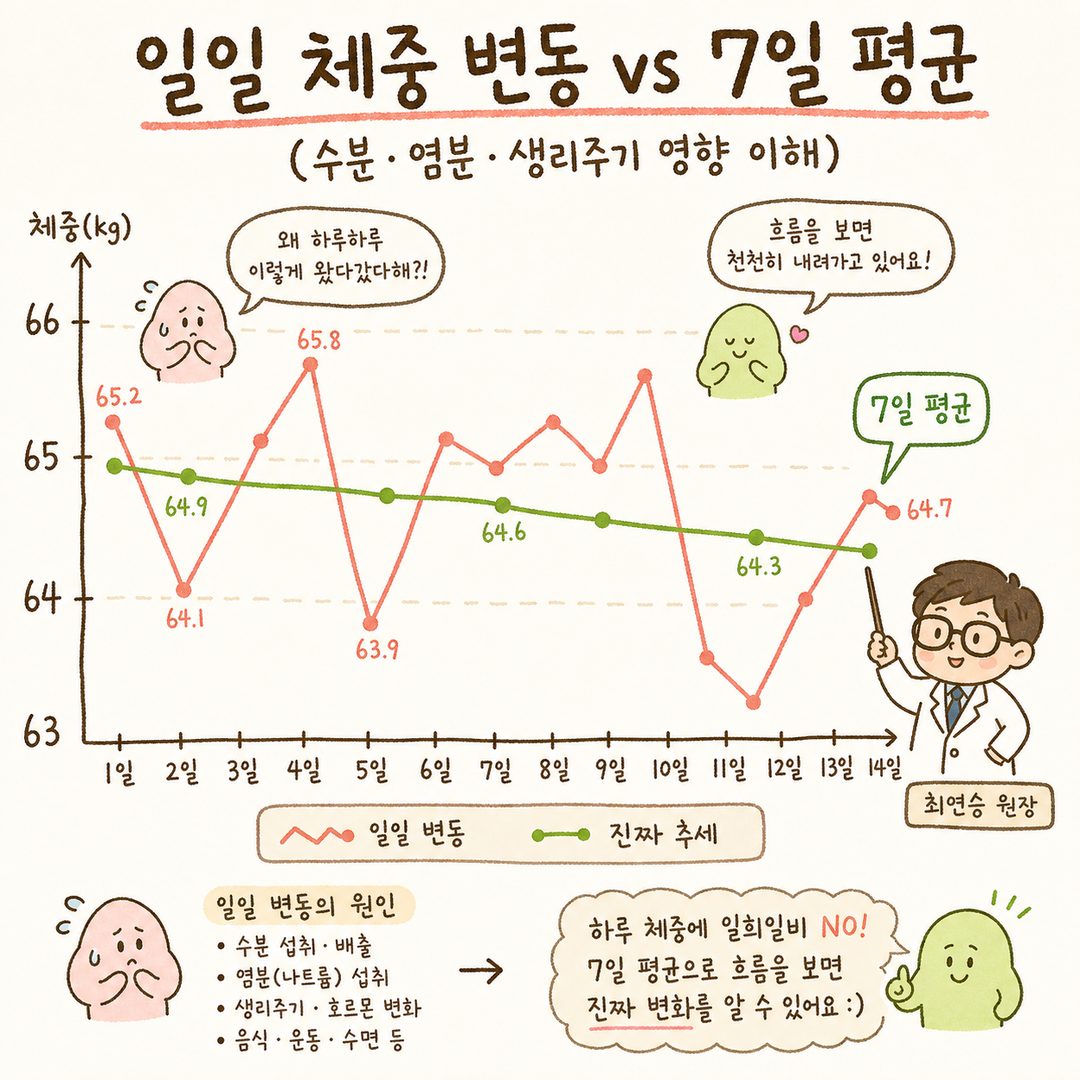
Looking at the progress of patients in the clinic, I often find that the diagnosis of a plateau was incorrect. Because people react emotionally to daily fluctuations, they often mistake water weight shifts of 1–2kg for a plateau. Short-term weight is bound to fluctuate due to factors like the menstrual cycle, water and sodium intake, or constipation.
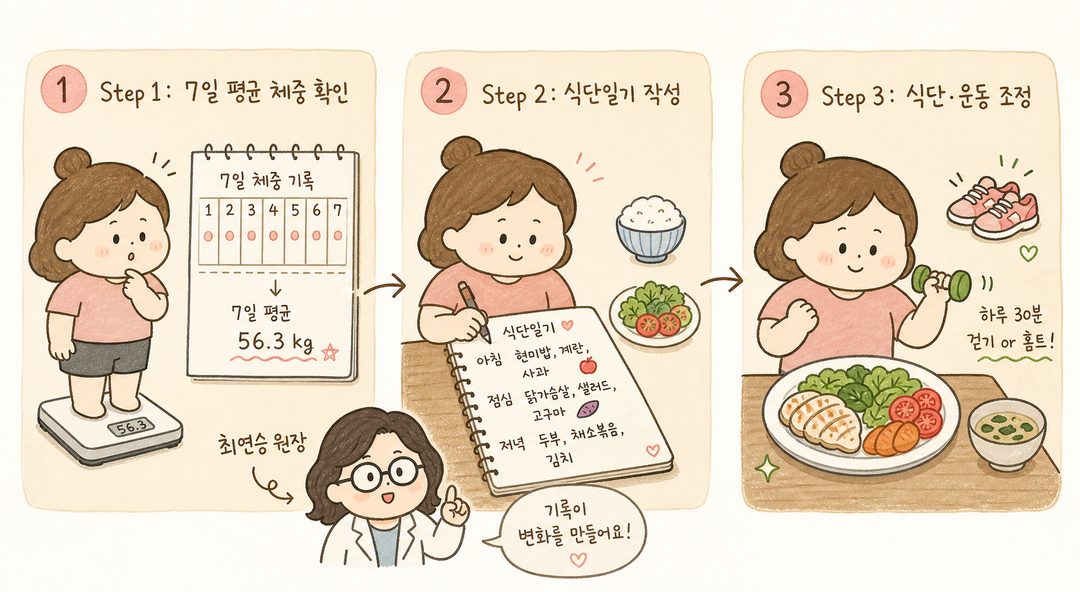
Therefore, I first recommend weighing yourself at the same time every morning (after waking up, after using the bathroom, on an empty stomach) and looking at the 7-day average. We only consider it a 'true plateau' when the average value remains unchanged for at least two weeks. Then, having the patient keep a food diary for 3 days to a week often reveals hidden calories from drinks or a handful of nuts that they hadn't noticed.
At this point, fine-tuning the diet or adding strength training will resume weight loss. Instead of only looking at the number on the scale, checking body fat percentage or waist circumference allows you to see that your body composition is changing even if your weight is stalled.
How Baekrokdam Clinic Views Plateaus
In Korean medicine, a plateau is viewed as a 'period where the body is trying to find a new equilibrium.' Rather than recklessly cutting more calories, we examine the individual's constitution, digestive state, sleep, and edema patterns to pinpoint where metabolism efficiency has dropped.
For example, even for the same plateau, the approach differs for someone with cold hands and feet and frequent edema, someone who struggles with appetite control, or someone who suffers from repeated stress-induced binge eating. There are aspects that cannot be solved simply by saying "eat less and move more." Pushing forward with an ultra-low-calorie diet while ignoring the body's signals will only accelerate muscle loss and metabolic decline.
That is why, in the clinic, we first check diet and exercise patterns, then recommend Korean medicine treatments tailored to the individual's constitution along with lifestyle adjustments. We redefine the plateau not as a 'wall to break through,' but as a 'check-up period to move to the next stage.'

Things You Can Try Starting Today
Small actions resolve plateaus faster than complex plans. Here are the items I frequently recommend in the clinic:
- Weigh yourself at the same time every day, but judge progress based on the 7-day average, not daily numbers.
- Keep a food diary for 3 days to a week, recording everything including snacks, drinks, and calories from sauces.
- Consciously increase protein intake. Protein helps maintain satiety and preserve muscle.
- If you have only been doing cardio, add strength training; if you have been doing the same exercise, change the type or intensity to provide a new stimulus.
- Even if weight remains the same, if body fat percentage and waist circumference decrease, weight loss is in progress.
- Avoid excessively low-calorie diets (around 800kcal), as they actually lower metabolism.
Additionally, sleep and stress management are crucial during a plateau. Lack of sleep or chronic stress can disrupt appetite hormones, making it easy to increase unconscious consumption.
A plateau is not evidence that 'my diet is wrong,' but a time for the body to catch its breath before moving to the next stage. If you see no change despite adjusting your diet and exercise on your own, I recommend checking your approach along with a constitutional diagnosis. Baekrokdam Clinic's Baekrok Gambi-jung program examines the constitution and lifestyle of those stuck in a plateau, helping to rebalance the body rather than forcing unreasonable weight loss. If you are at your most frustrated point right now, it might be a good time to have a conversation with us.