
Korean Herbal Diet Pills vs. Prescription Drugs

Table of Contents
Have you ever spent a long time staring at a search bar with both 'herbal medicine' and 'prescription drugs' typed in, wondering which one is right for your body? This is a question I hear very often in the consultation room.
Why Korean Herbal Medicine and Prescription Drugs Differ
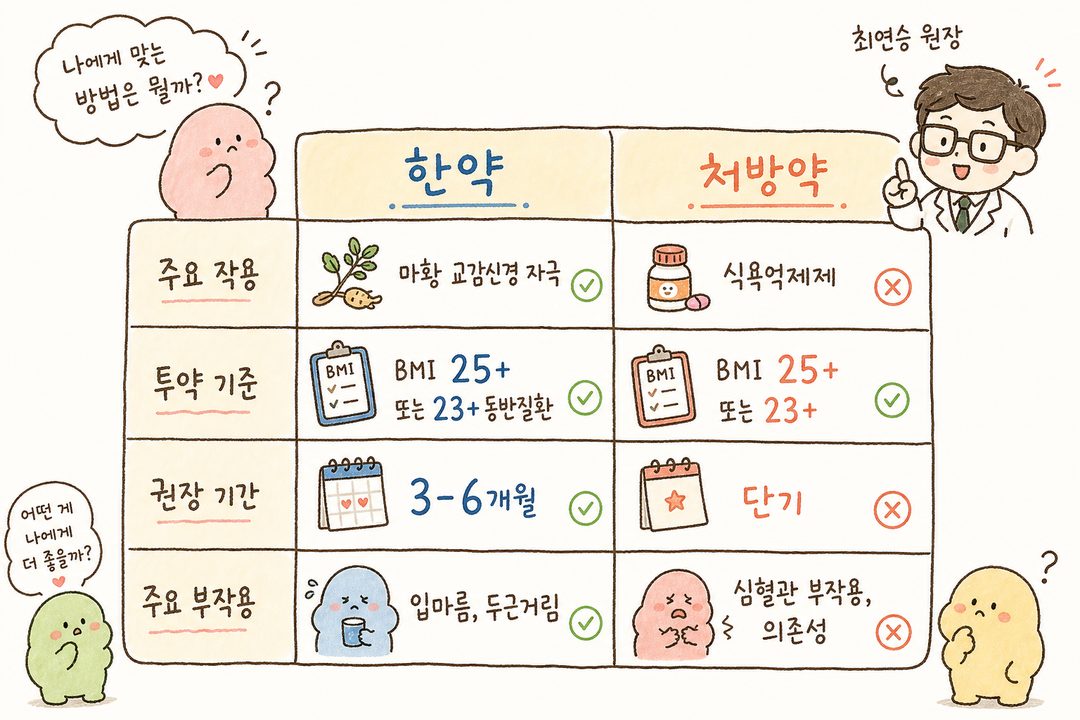
Korean herbal diet pills and prescription drugs (Western obesity treatments) differ in everything from their mechanisms of action to side effects and safety management. Therefore, the right choice depends on your weight, comorbidities, and lifestyle. However, one thing remains the same: neither is a 'magic pill' that works just by taking it; diet and exercise management are always the foundation.
Korean herbal diet pills usually center around Ephedra (Ma-huang), combined with herbs like Coix seed, Rehmannia root, and Coptis rhizome. It is reported that ephedrine and pseudoephedrine in Ephedra stimulate the sympathetic nervous system to increase the basal metabolic rate and suppress appetite. Coix seed helps with diuresis to reduce edema, and the berberine in Coptis is known to be involved in blood sugar and lipid metabolism.
Prescription drugs are different. They are 'real medications' issued by a doctor after confirming obesity diagnostic criteria. Looking at comparative data between Korean and Western medicine, prescriptions are generally considered for simple obesity with a BMI of 25 or higher, or a BMI of 23 or higher with comorbidities such as hypertension, diabetes, or dyslipidemia. They are introduced when weight loss is insufficient after 3 to 6 months of diet and exercise; doctors may refuse to prescribe them if the patient seeks them purely for aesthetic purposes.
How Much Weight Can You Actually Lose?
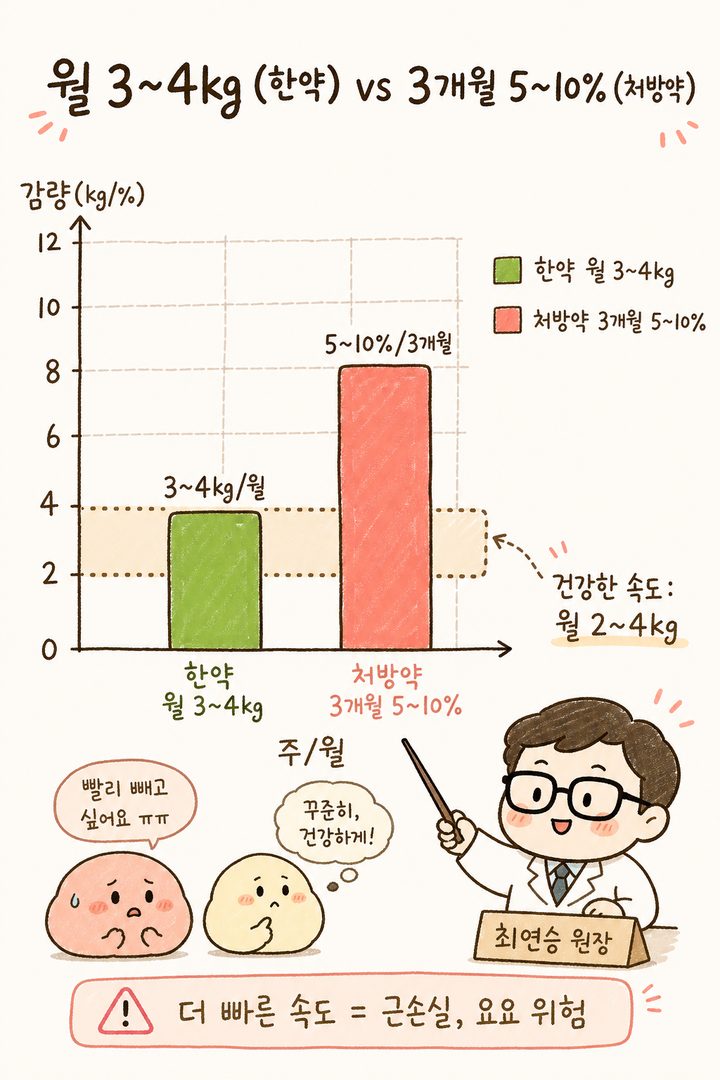
According to public data from Korean medicine clinics and hospitals, many set a goal of an average of 3–4 kg per month when taking Korean herbal diet pills. A Korean medicine hospital in Cheongju also states that patients lose an average of 3–4 kg after one month of taking Korean herbal diet pills.
Data on prescription drugs report that appetite suppressants like Phentermine and Phendimetrazine result in a weight loss of about 5–10% of body weight over 3 months. The numbers look similar, but prescription drugs are generally intended for short-term use due to the risk of dependency and cardiovascular side effects.
Materials citing the Korean Society for the Study of Obesity guidelines set a healthy weight loss speed at 0.5–1.0 kg per week, or 2–4 kg per month. It is reported that losing weight faster than this can lead to side effects such as muscle loss, gallstones, and menstrual irregularities. Advertisements claiming 5 kg or 7 kg loss in a month are tempting, but in the clinic, we see that the yo-yo effect occurs much more frequently at such speeds.
Baekrokdam Clinic’s Perspective
In Korean medicine, we do not group 'weight gain patterns' into a single category. Even with the same weight and BMI, the approach differs for someone whose appetite is constantly triggered versus someone who eats little but feels bloated and heavy. Therefore, in the first stage of consultation, we look into signals such as appetite, sleep, edema, digestion, and menstruation.
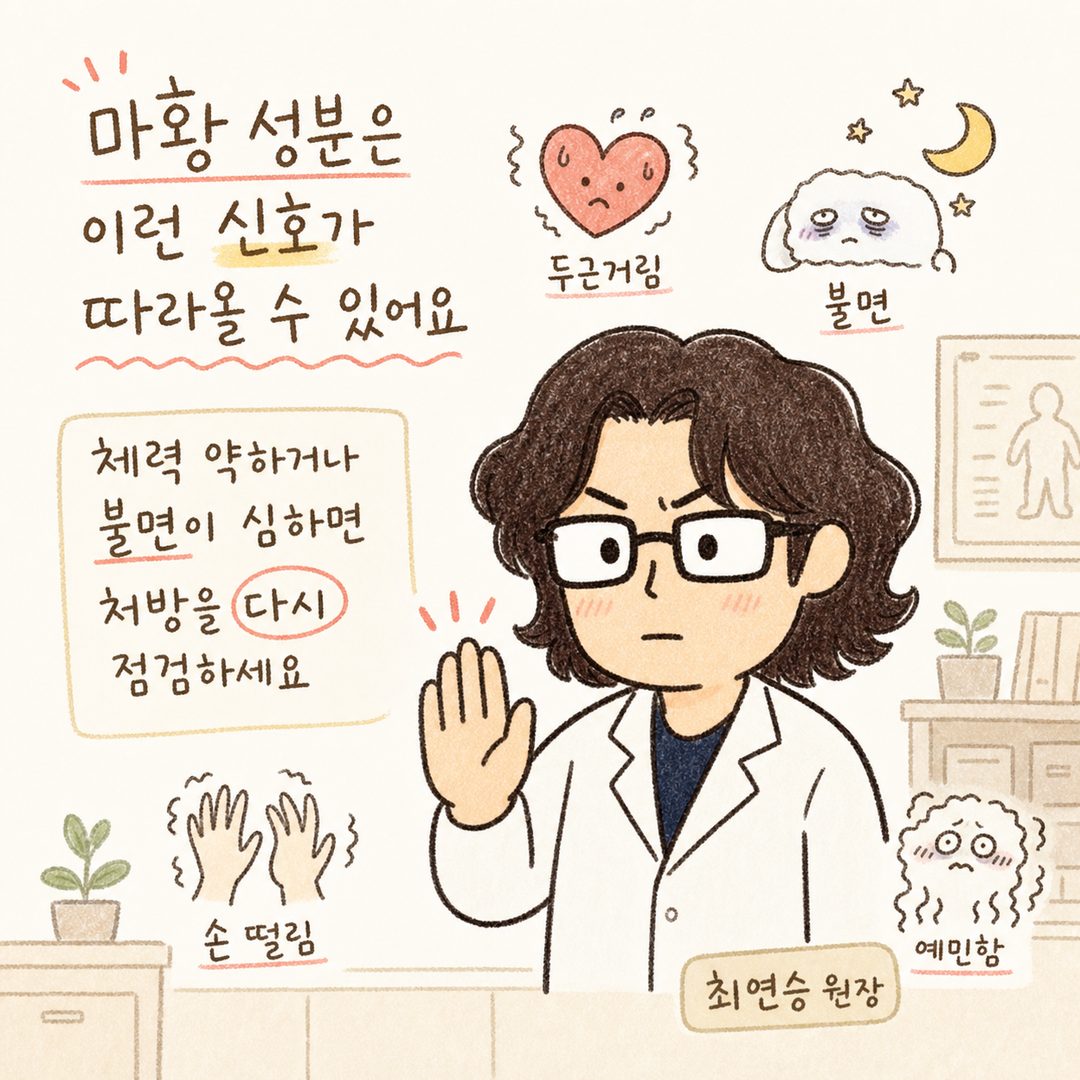
Ephedra-based prescriptions help regulate metabolism and appetite. However, there are commonly reported reactions: dry mouth, bad breath, feverishness, increased sweating, heart palpitations, hand tremors, insomnia, and increased alertness. These are closer to pharmacological signals resulting from sympathetic nervous system stimulation rather than simple side effects. Therefore, if a patient has weak physical strength, severe insomnia, hyperthyroidism, or cardiovascular disease, we design a different prescription from the start.
Viewing prescription drugs and herbal medicine as a 'confrontation' doesn't provide a clear answer. It is much more practical to identify which one is safer as a short-term aid based on the patient's condition. Herbal medicine is also safest when used as a short-term aid after a consultation with a Korean medicine doctor.
Practical Tips to Start Right Now
Whether you are deciding to start or are already taking medication, please keep these four points in mind:
- Record your daily meals: Write just one line a day, focusing on lunch and dinner. You will quickly see where binge-eating patterns occur.
- Water intake: Korean herbal diet pills have a diuretic effect, often causing dry mouth. It is important to make a habit of drinking water frequently.
- Light exercise 2–3 times a week: Pushing yourself with high-intensity exercise every day to lose weight quickly can lead to muscle loss and injury. It is safer to start 2–3 times a week and increase gradually.
- Measure weight once a week: Weighing yourself every day can be discouraging due to fluctuations from edema or menstrual cycles. Record your weight just once a week at the same time and day.
I’ll add one more thing: if you have been taking medication for about 4 weeks with almost no change in weight but severe palpitations or insomnia, that is not a signal to increase the dosage, but a signal to re-evaluate the prescription. Please consult your doctor or Korean medicine doctor.
I believe weight management is a process of understanding 'how my body stores and loses weight.' At Baekrokdam Clinic, we examine your constitution, eating habits, and accompanying symptoms to design a plan for short-term aid and lifestyle management with Baekrok Gambi-jung. If you have been hesitating between herbal medicine and prescription drugs, I encourage you to come and discuss it with us in the consultation room.