
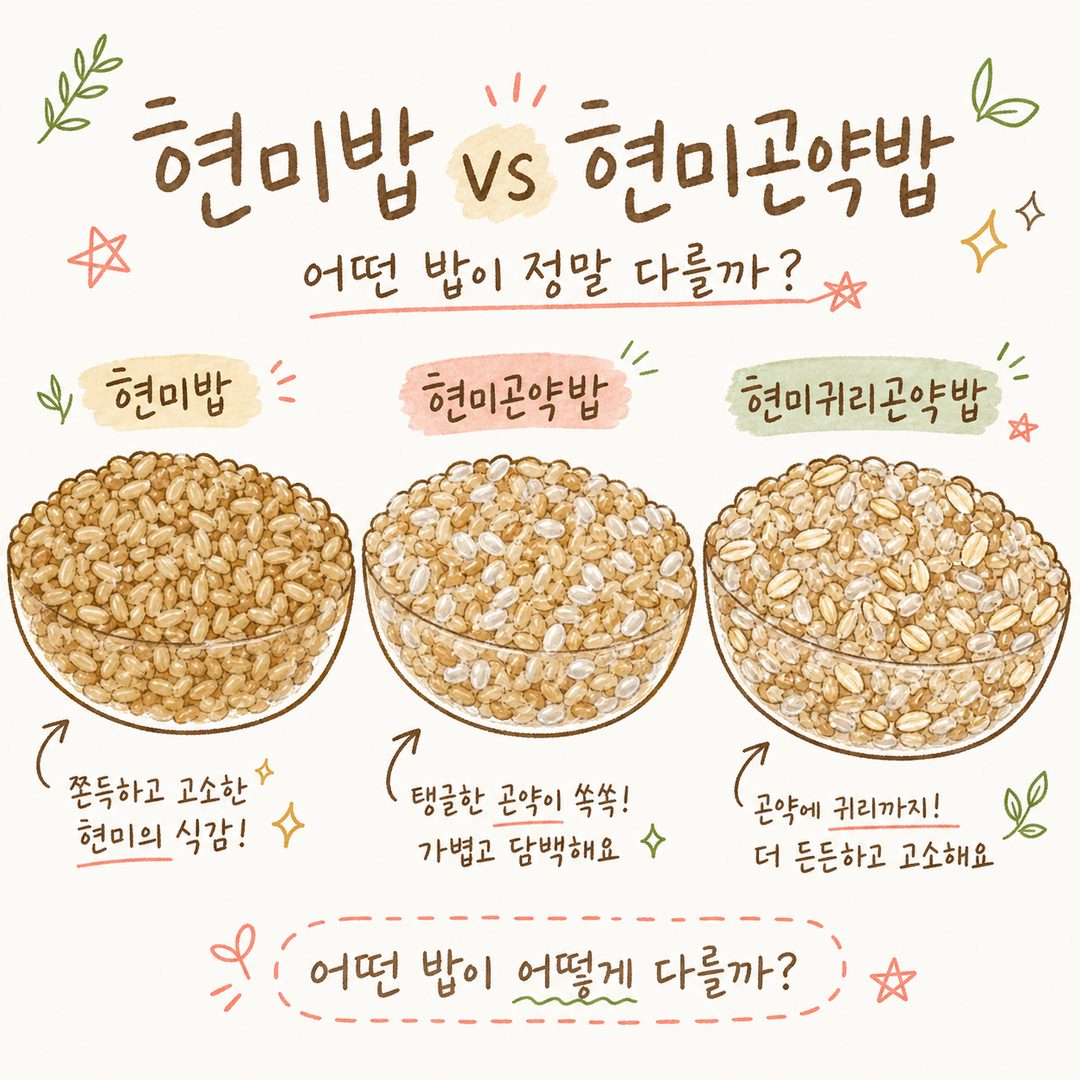
Brown Rice vs. Konjac Rice: What's the Difference?

Table of Contents
When planning a weight management diet, many people get stuck wondering what to eat instead of white rice. With options like brown rice, brown rice with konjac, and brown rice with oats and konjac available at stores, it's confusing to know which has fewer calories and is truly effective for weight loss. In our clinic, we often hear patients ask, 'Doctor, why isn't my weight decreasing even though I'm eating brown rice?' Today, we'll break down these three rice options from both nutritional and weight management perspectives.
Why 'Mixed Grain Rice' Has Different Calorie Counts
The key difference between these three rice dishes lies in how much konjac rice is added. According to data from the Ministry of Food and Drug Safety, brown rice contains approximately 345kcal per 100g of uncooked rice, which is similar to white rice in terms of calories. However, it contains about three times more dietary fiber, leading to slower blood sugar spikes and longer-lasting satiety. Many people who switch from white rice (about 330kcal per 210g bowl) to brown rice experience smoother post-meal blood sugar curves.
The issue is quantity. Since brown rice is still rice, eating a full bowl means consuming around 300kcal. This is where konjac rice comes in. Konjac is 97.3% water, with the remaining 3% consisting of trace carbohydrates and protein, resulting in only about 6kcal per 100g - practically zero. By mixing in konjac rice, you maintain the same volume and feeling of fullness while significantly reducing total calories.
Calorie Comparison: One Bowl of Each
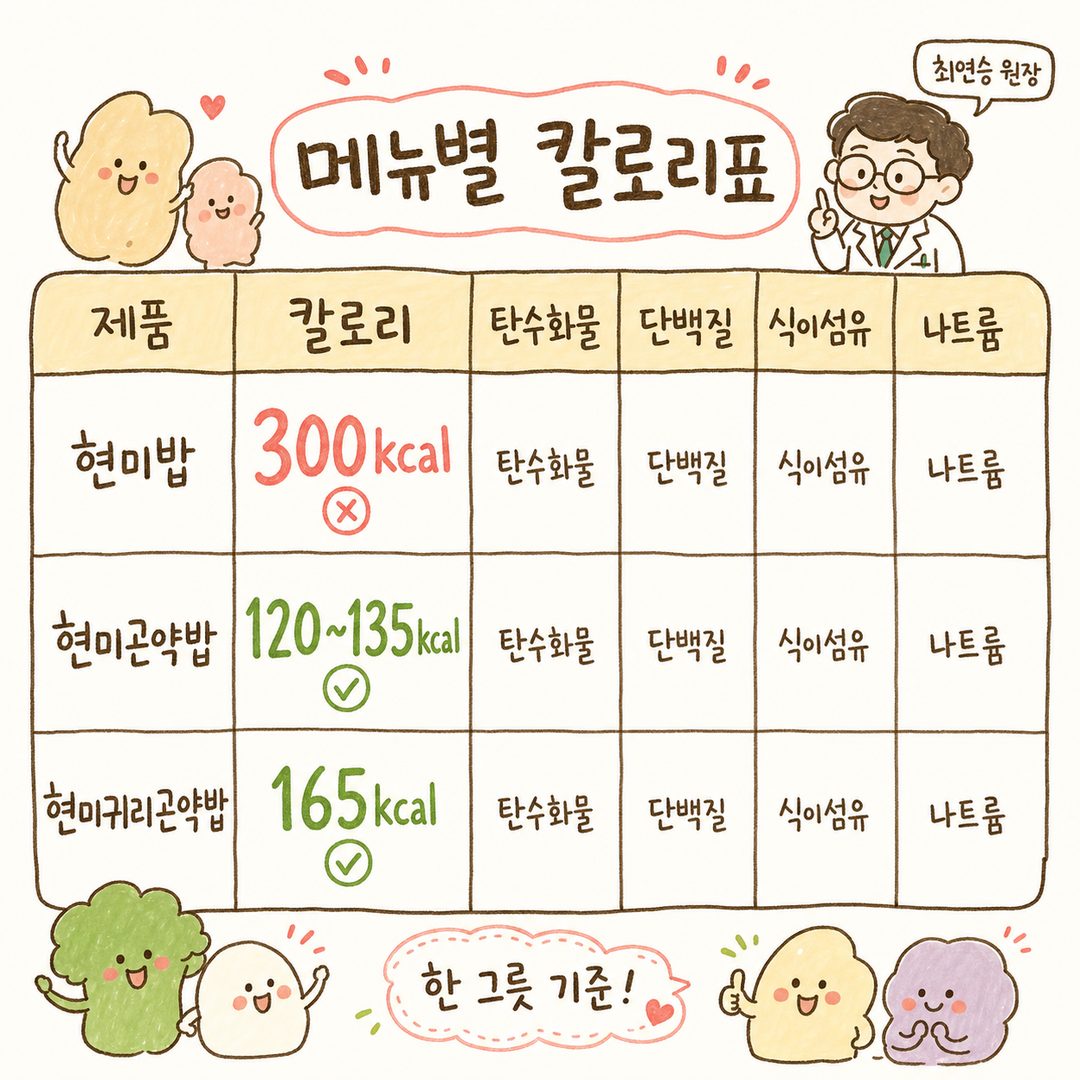
Let's look at the actual numbers for one bowl (approximately 210g) of each type:
- Brown Rice (1 bowl, 210g): Approximately 300kcal. Contains about 3 times more dietary fiber than white rice.
- Brown Rice with Konjac (70g brown rice + 70g konjac rice, about 200-220g per bowl): Approximately 240kcal from brown rice + 5-10kcal from konjac rice, totaling about half the calories of white rice. Commercial products like Daesun Mulsan's 150g serving contains about 120kcal, while Heodak's 75% konjac rice product has 135kcal.
- Brown Rice with Oats and Konjac (Haatban Rice Plan 150g): 165kcal, 39g carbohydrates, 3g protein, 1.4g fat, 8.7g dietary fiber, 60mg sodium. The dietary fiber content is about 35% of the daily recommended intake (based on 25g).
Considering that one 210g serving of Haatban mixed grain rice contains about 330kcal, a 150g serving of brown rice with oats and konjac provides half the calories despite being slightly smaller in portion. It also contains significantly more dietary fiber, which helps with constipation, satiety, and blood sugar management. This makes it an excellent choice for those who say, 'I need to reduce my rice intake, but I get too hungry.'

Baekrokdam's Korean Medicine Perspective
In Korean medicine, we pay special attention to the burden on the spleen and stomach (脾胃) during weight management. Refined carbohydrates like white rice cause rapid spikes in post-meal blood sugar and insulin, leading to the accumulation of dampness-phlegm (濕痰) in the spleen and stomach. This often results in difficulty losing weight, post-meal drowsiness, and swelling in the hands and feet.
Brown rice, being an unrefined carbohydrate, retains the nutrients from the germ and bran layers. It's rich in antioxidants like phytic acid and polyphenols, along with dietary fiber that helps moderate blood sugar spikes. Konjac's glucomannan absorbs water in the intestines, creating a feeling of fullness and aiding bowel movements to relieve constipation. Oats are rich in beta-glucan, which helps stabilize cholesterol and blood sugar levels.
However, eating only konjac rice can lead to protein deficiency. Since one serving of Haatban brown rice with oats and konjac contains only about 3g of protein, it's essential to include a palm-sized portion of protein-rich foods like chicken breast, tofu, eggs, or fish with each meal to prevent muscle loss while losing fat. For those with cold extremities or weak digestion, it's better to warm up konjac rice and eat it with soup rather than consuming it cold.

Practical Tips You Can Apply Today
Here are some common recommendations we give in our clinic:
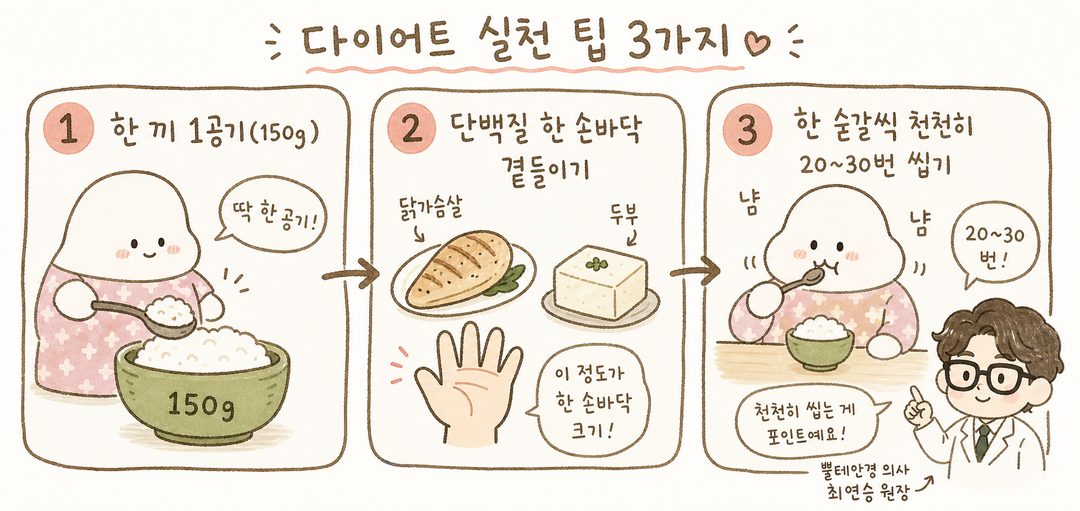
- One Bowl per Meal Rule: For brown rice with konjac or brown rice with oats and konjac, limit yourself to one 150g bowl per meal. Eating two bowls defeats the purpose of the lower calorie count.
- One Palm of Protein: Include a palm-sized portion of protein with each meal to compensate for the low protein content in konjac rice.
- Chew Thoroughly: Chew each bite 20-30 times slowly to feel full faster with the same amount of food.
- No Carbs After 9 PM: Even konjac rice can be burdensome if eaten too late at night.
- Stay Hydrated: Konjac fiber needs water to expand. Drink at least 1.5L of water daily.
- Watch Sodium Intake: While konjac rice itself is low in sodium (about 60mg), pairing it with salty soups or stews can lead to water retention.
Many people notice improvements in post-meal bloating, drowsiness, and constipation within just one week of switching their rice. However, some individuals still struggle with weight loss despite these changes. For those with weak spleen-stomach function, edema-prone constitution, or intense nighttime cravings, dietary changes alone may not be enough. At Baekrokdam Korean Medicine Clinic, we first assess your constitution and then use Baekrok Gambi-jung to help regulate appetite, reduce swelling, and improve digestion. This helps your body better utilize the reduced calories from konjac rice. If you're feeling overwhelmed trying to manage your diet alone, consider starting with a consultation.