
Diet Chocolate: Calories, 70% Cacao, and Protein Tips

Table of Contents
I often meet patients in my clinic who feel guilty because they keep reaching for chocolate snacks while on a diet. As someone who loves sweets myself, I completely understand that feeling.

Why do we crave chocolate snacks during a diet?
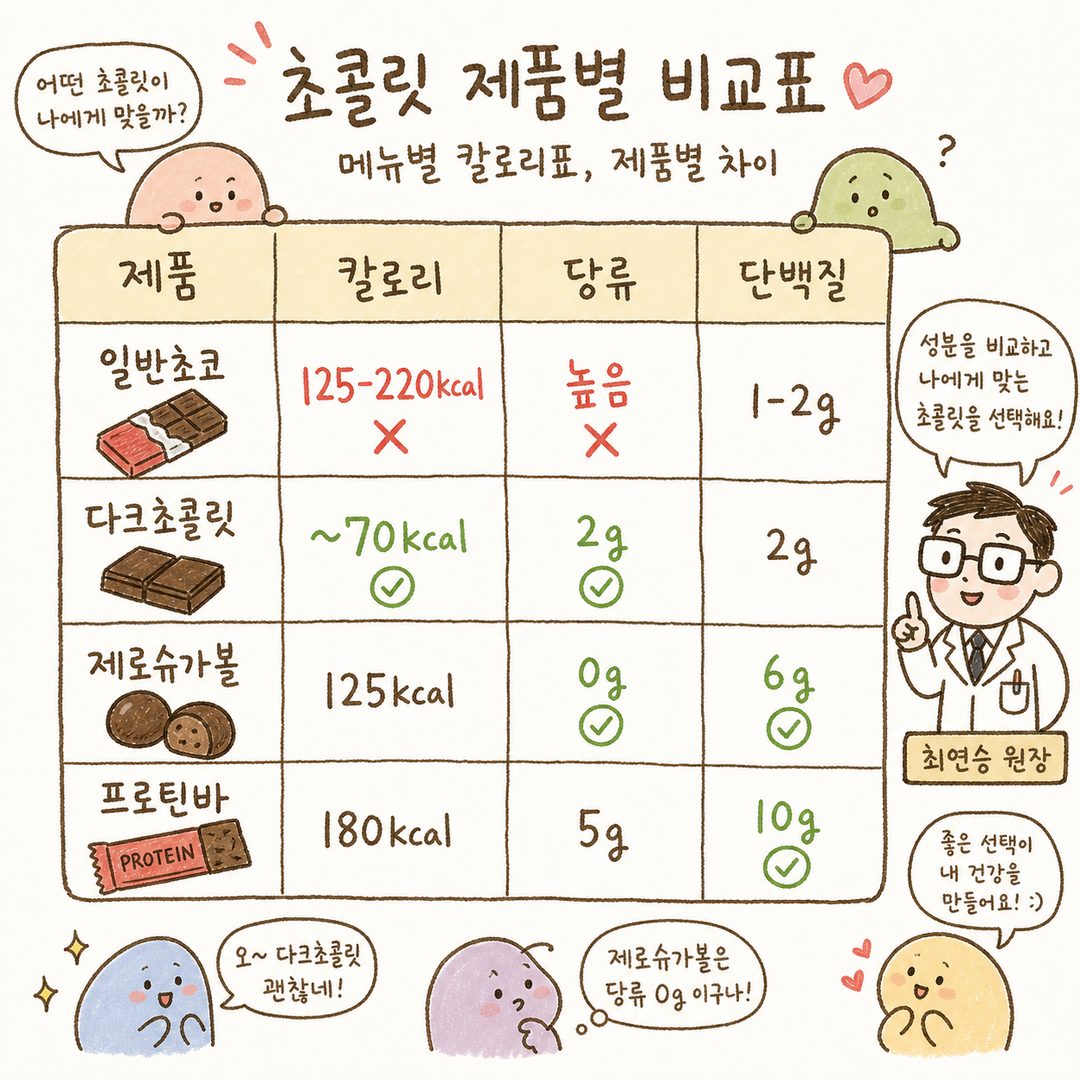
Craving sweets when stress builds up or when you haven't eaten properly is a natural biological response. When blood sugar drops, the brain sends signals to replenish energy quickly. However, common commercial chocolate snacks usually contain between 125kcal and 220kcal per bag. Mindlessly opening one bag can easily exceed the calories of the side dishes in a full meal.
The tricky part lies elsewhere. Highly sweet chocolate snacks are typically a combination that raises both sugar and fat levels. They don't just have high calories; they cause blood sugar to spike and then crash, creating a vicious cycle where you crave sweets again shortly after eating. This is why a promise to "just eat one bag" often ends with two.

Change your 'selection criteria' instead of quitting entirely
I don't tell my patients to quit chocolate snacks unconditionally. I've seen too many people end up binge eating after trying to hold back. Instead, I help them change their selection criteria.
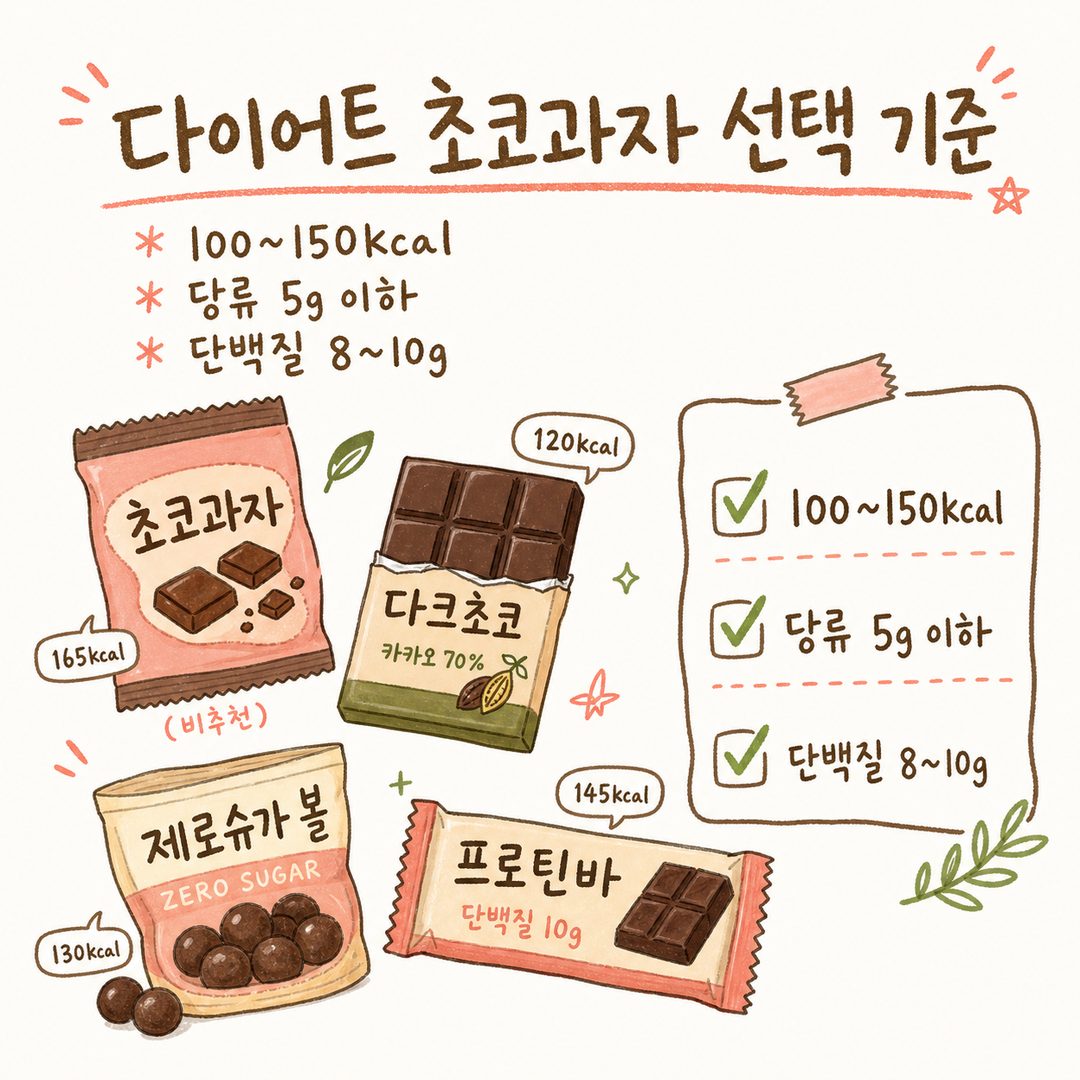
- Aim for 100–150kcal per serving
- Look for 0g sugar or low-sugar products first
- Choose products containing protein for better satiety
- Opt for dark chocolate with high cacao content
If you check labels carefully, you will find products with under 200kcal, 5g or less of sugar, and 5g or more of protein per serving. For instance, there are zero-sugar chocolate balls that offer 125kcal, 0g sugar, and 6g protein per 30g bag. Chocolate cinnamon bagel chips are also frequently mentioned in the diet snack category at 220kcal per bag. However, just because something is labeled a "diet chocolate snack" doesn't mean it's low in calories. If it contains nuts, chocolate coating, or is in cookie form, the calories can rise significantly.
How patients changed after switching their criteria
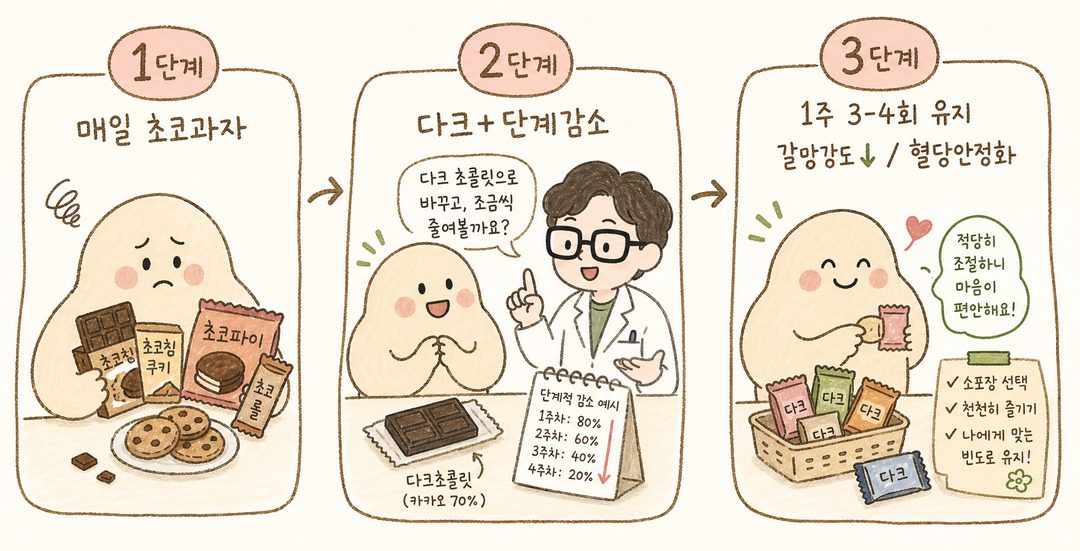
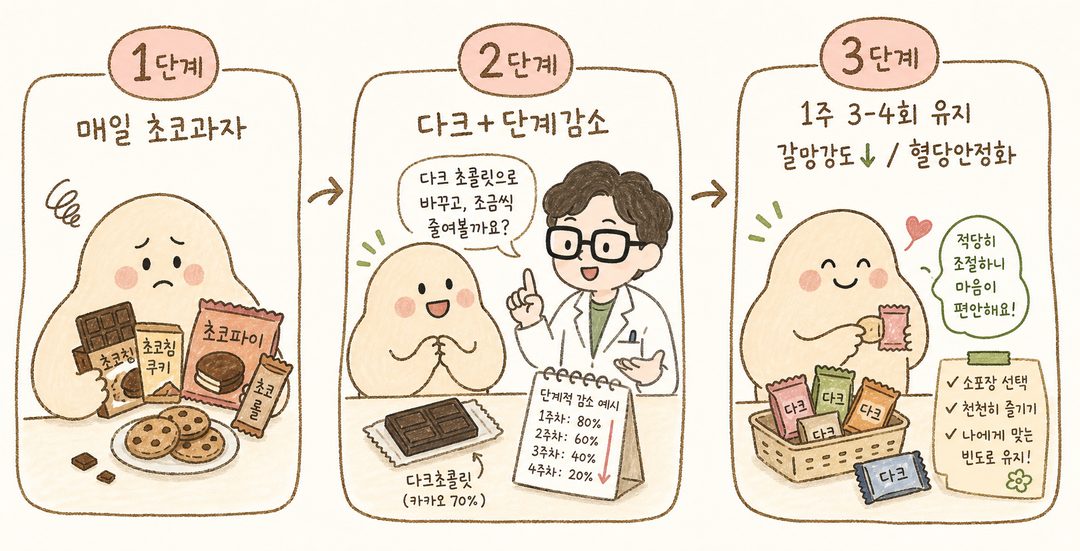
Many people come for consultations saying, "I feel like I'd lose weight if I could just quit chocolate snacks, but I simply can't." One patient used to eat a bag of regular chocolate snacks every evening. We switched this to 1–2 pieces of 70% cacao dark chocolate and reduced regular snacks to 3–4 times a week. We stepped down gradually rather than quitting all at once.
The key wasn't extraordinary willpower; it was changing "what was within reach when craving sweets." By placing low-sugar protein bars or individually wrapped dark chocolate on the desk instead of regular snacks, the object of their subconscious habit changed. While weight loss varies by individual, I often see a decrease in the cravings themselves. This happens because the added protein prevents blood sugar from fluctuating wildly.
Sweet cravings from the perspective of Baekrokdam Clinic
In Korean medicine, constant cravings for sweets are not viewed simply as a lack of willpower. Those with weak Spleen and Stomach (脾胃) function or accumulated Phlegm-dampness (痰飮) are more drawn to sweet flavors. If a pattern of skipping proper meals and snacking persists, the Spleen and Stomach weaken further, which in turn increases the craving for sweets.
From a constitutional standpoint, Qi deficiency (氣虛) or Phlegm-dampness (痰濕) types tend to be more vulnerable to sweets. For these individuals, cravings are rarely managed by a calorie-restricted diet alone. By combining dietary adjustments with a Korean medicine approach that supports Spleen and Stomach function, many find their cravings gradually subsiding. In the clinic, we determine prescriptions by looking at both constitution and lifestyle patterns.
Points to practice starting today
Here is a summary of things you can apply immediately:
- Choose small-packaged products around 100–150kcal per serving.
- Prioritize products with 70% or more cacao, 5g or less of sugar, and 8–10g of protein.
- Limit chocolate snacks to once a day, and gradually reduce the frequency of regular chocolate snacks to 3–4 times a week.
- Note the times when you crave sweets—it's usually in the evening on days when your meals were insufficient.
- Eat protein and vegetables first during meals—when you are full from a meal, the urge to snack naturally subsides.
Even if you pick just one or two of these five tips and try them for a week, your perception of sweets will begin to change. Don't try to change everything at once.
You don't have to quit chocolate snacks forever. Refining the quantity, type, and frequency is a much more sustainable strategy. However, if the cravings are so strong that they are difficult to suppress with willpower alone, it helps to examine your Spleen and Stomach function and constitution. Baekrok Gambi-jung is a Korean medicine diet program that examines both constitution and lifestyle patterns for prescription. If your cravings for sweets are particularly intense or if you feel you've reached a limit with dietary management alone, come for a consultation at Baekrokdam Clinic.